
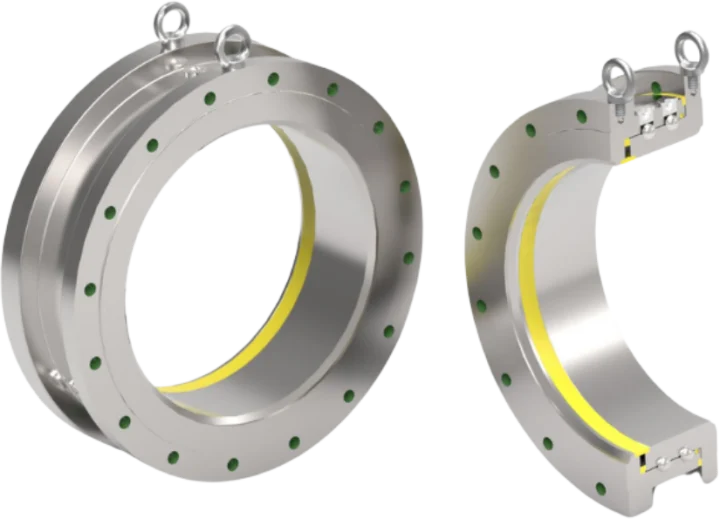
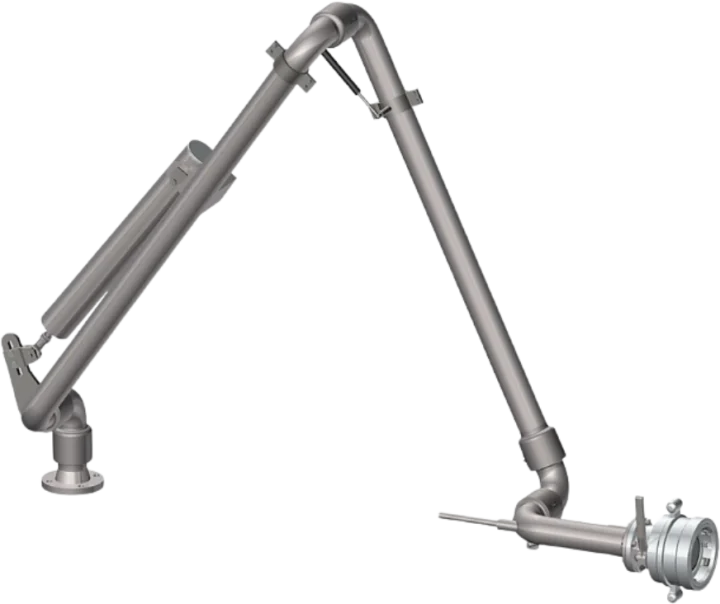




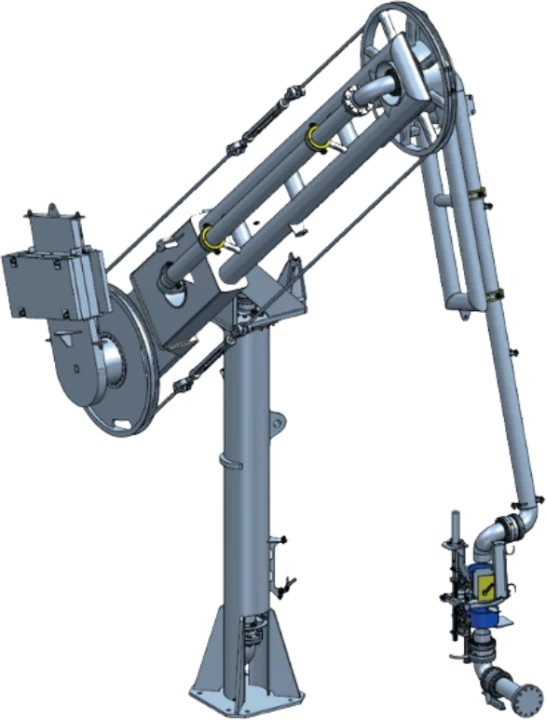




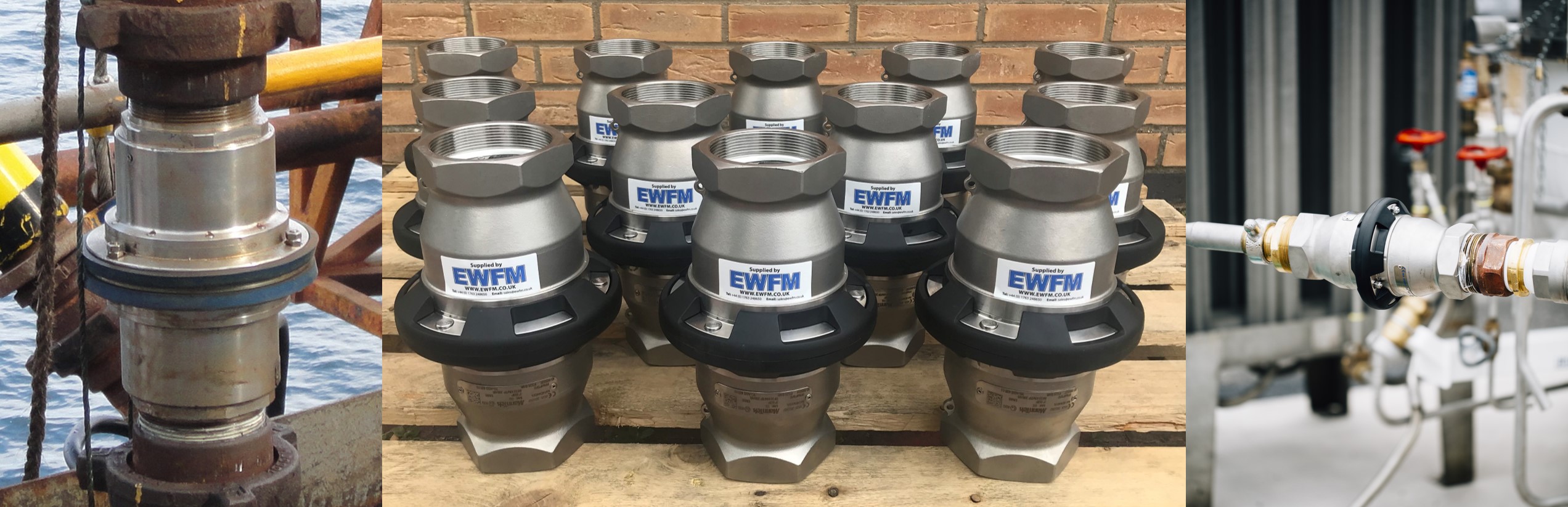
Breakaway couplings are a critical safety component across fuel, chemical, industrial, marine, and cryogenic transfer systems. They are designed to separate cleanly under excessive force, such as a vehicle or vessel pulling away before disconnection, preventing pipeline or hose damage, product loss, and injury to personnel.
At EWFM, our Breakaway Couplings range covers eight products across three categories: standard, engineered, and loading arm breakaway couplings, suited to a wide range of applications and industries.
What Is a Breakaway Coupling?
A breakaway coupling is a safety device fitted into a hose or pipeline transfer system. Its purpose is to:
- Prevent pull-away accidents during loading and unloading
- Protect terminals, hoses, and connected equipment from damage
- Eliminate unwanted or uncontrolled product release
If excess force is applied to the line, for example, a road tanker driving off before the hose is disconnected, the coupling separates at a designated point, sealing both halves and stopping product loss and equipment damage.
Our Breakaway Coupling Range
| Product | Typical Application | Key Specfications |
| MannTek Industrial Breakaway Coupling | General industrial fluid transfer | Size: 1″ up to 12″ Material: Aluminium / Stainless Steel / Brass |
| MannTek Cryogenic Breakaway Coupling | LNG and cryogenic liquid transfer | Size: 1″ up to 8″ Material: Stainless Steel |
| MannTek Marine Breakaway Coupling | Ship-to-shore and marine transfer | Size: 1″ up to 12″ Material: Aluminium / Stainless Steel |
| Breakaway Coupling with Cable Control | Applications requiring remote/manual release | Size: 1″ up to 12″ Material: Stainless Steel / Hastelloy |
| In-Line Breakaway Coupling | Fixed pipeline installations | Size: 6″ to 16″ Material: Stainless Steel |
| Full Bore Safety Breakaway Coupling | High-flow transfer requiring unrestricted bore | Size: 6″ to 16″ Material: Aluminium / Stainless Steel |
| Marine Floating Hose Breakaway Coupling | Floating hose strings, offshore transfer | Size: 6″ to 16″ Material: Stainless Steel / Duplex Steel |
| TTMA Breakaway Coupling | Bottom loading stations | Size: 4″ Material: Aluminium |
Frequently Asked Questions
What is a breakaway coupling used for?
A breakaway coupling is a safety device fitted into a hose or pipeline transfer system. It’s designed to separate cleanly if excessive force is applied, for example, if a vehicle or vessel moves away before disconnection, preventing damage to hoses, pipelines, and terminals, and stopping uncontrolled product release.
What’s the difference between a cable release and a breaking pin breakaway coupling?
Cable release couplings separate when locking bolts are pulled out via a cable, causing the internal poppets to close rapidly. Breaking pin couplings separate when the force on the line exceeds the calculated strength of internal pins, engineered to break at a set point.
Are breakaway couplings reusable after they’ve activated?
Yes most breakaway couplings are designed to be reset or repaired rather than replaced entirely.
What industries use breakaway couplings?
They’re widely used across fuel and chemical distribution, marine loading, LNG and cryogenic transfer, and general industrial fluid handling, anywhere a hose or arm connects to a vehicle, vessel, or moving system during transfer.
Explore the full range on our Breakaway Couplings category page, or get in touch with our team to find the right coupling for your application.
