







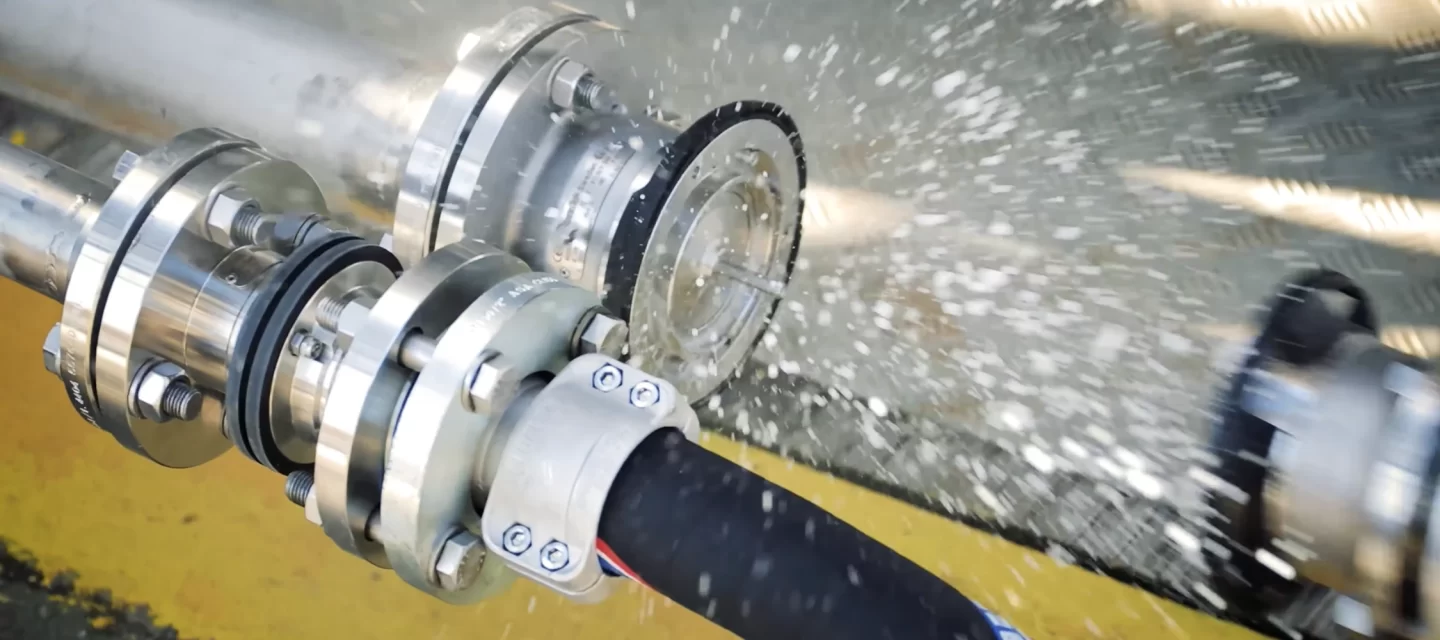
A breakaway coupling is one of the smallest parts in a fluid transfer system. But it’s also one of the most important safety devices you’ll ever specify. Get the wrong one in place and you’re looking at potential product loss, damaged equipment, environmental incidents and downtime. Get the right one, and it sits quietly in your pipeline for years, only doing its job when it’s actually needed.
EWFM is a master distributor of MannTek Breakaway Couplings. We also supply our own engineered range for applications where a standard, off-the-shelf unit isn’t enough. This guide runs through the main things to think about before you specify a breakaway coupling. That way, you end up with something that actually suits your application, your media and your operating conditions.
What Is a Breakaway Coupling and When Should One Be Specified?
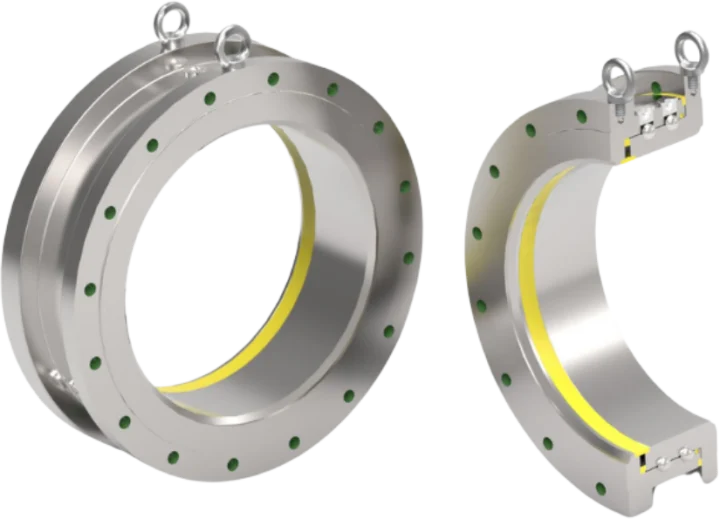
A breakaway coupling is a fail-safe device fitted into a hose or pipeline. It disconnects automatically if it’s put under excessive force, for example if a road tanker or vessel pulls away before the hose has been disconnected. Instead of tearing the hose, damaging a loading arm or rupturing a connection, the coupling separates cleanly at a pre-set tension. Both sides seal to stop any spillage.
There are two main types available. Cable release couplings use internal tension cables to hold the two halves together. If a hose is pulled or a drive-off happens, those cables release in a controlled way. The coupling separates cleanly without damaging the hose, equipment or anything nearby. Break pin couplings take a different approach, using precision-engineered shear pins instead of cables. These are designed to break at a specific load, so the coupling separates at exactly the right point. That protects the system, the surrounding equipment and anyone working nearby. Which type suits you best usually comes down to how the coupling is being deployed, and how much control you want over the release.
You should specify one anywhere there’s a real risk of pull-away or excess tension in a transfer line. That typically means:
- Road tanker loading and offloading at fuel depots, chemical plants and bulk storage sites
- Marine and ship-to-shore transfer, where vessel movement, tide and mooring changes put strain on hoses
- Rail car loading
- Any hard-piped or hose connected system where accidental drive away, crane movement or operator error could pull a line tight
- Anywhere an accidental pull-away could result in product loss, environmental damage or costly equipment failure.
What Operating Environment Will the Coupling Face?
The environment a coupling has to work in shapes most of the decisions that follow, so it’s worth nailing this down early.
Onshore installations and marine or offshore ones have quite different demands. Marine breakaway couplings need to cope with saltwater exposure and constant vessel movement. They generally sit in harsher, more corrosive conditions than a typical tanker bay.
It’s also worth checking whether the coupling needs to be ATEX-rated, or otherwise certified for a hazardous area. Some applications call for hygienic materials and finishes too, particularly if they need to withstand regular washdown. This is common in food, drink and pharmaceutical settings.
How Does Temperature Affect Coupling and Seal Selection?
Temperature affects two things separately: the coupling body and the seals inside it. Standard breakaway couplings are generally built for around -20°C to +80°C. For cold applications like LNG or LPG, a standard breakaway won’t do the job; that’s where cryogenic breakaway couplings come in, rated down to around -196°C.
Seals are usually the tighter constraint. NBR typically covers -38°C to +80°C, EPDM around -54°C to +120°C, FKM (Viton) around -20°C to +200°C, and FFKM (Kalrez or Chemraz) up to around +260°C for the most demanding applications.
Which Materials Are Right for Your Media?
Material choice affects chemical compatibility, corrosion resistance, weight and cost. It’s worth being precise about exactly what the coupling will be handling before you commit to a spec. If you want to weigh up the Breakaway Coupling options side by side, compare the different types in our Breakaway Couplings comparison table.
Across the EWFM and MannTek range, common body materials include:
- Aluminium: lightweight and cost-effective, common in fuel and general industrial duties
- Stainless steel: better corrosion resistance, suited to chemical transfer and marine environments
- Duplex and super duplex steel: for higher-strength or more corrosive offshore applications
- Hastelloy: for aggressive or highly corrosive chemicals
- Brass: for certain fuel and general fluid applications
Seal material matters just as much as the coupling body. EPDM, FKM (Viton), FFKM (Chemraz or Kalrez) and NBR seals all have different chemical compatibility and temperature ranges. Check both the body material and the seal against your media before finalising anything.
What Pressure Rating Do You Need?
Every breakaway coupling has a rated working pressure. It needs to match, or ideally comfortably exceed, your system’s actual operating pressure. Don’t forget to account for pressure spikes from surges or pump start-up, not just steady-state running pressure.
Across our range, pressure ratings run from vacuum service up to 40 bar, with most standard industrial and marine breakaway couplings rated between 0 and 25 bar. If your application runs higher than that, or needs something outside our standard range, our team can put together a bespoke solution.
It’s also worth checking the separation force rating, which is the amount of tension needed to trigger disconnection. This needs to be low enough to protect your hose and equipment, but high enough that the coupling won’t trigger accidentally during normal handling or minor hose movement.
How Should a Breakaway Coupling Be Installed?
A breakaway coupling only does its job if it’s fitted correctly, and that starts with understanding how it’s actually meant to be connected. Industrial Breakaway Couplings are designed for use when at least one end is connected to fixed pipework, and they release under angular pull. Marine Breakaway Couplings, on the other hand, are designed for use only between two hoses, and release only under straight pull.
Beyond that, position and orientation matter. Install the coupling as close as practical to the connection point, so it separates before the rest of the system takes damaging strain. Everything either side of the coupling should be properly supported, so it isn’t carrying static load it was never meant to bear. Make sure thread type, flange standard or camlock fitting all match the rest of your system; our range includes TTMA flanged couplings alongside standard threaded and flanged options. And after activation, most couplings can be reconnected and reset on site, but always follow the manufacturer’s procedure and check the seals before putting the line back into service.
If you’re not sure how a coupling should tie into your existing pipework or loading arm, our team can advise.
How Do You Maintain a Breakaway Coupling?
A breakaway coupling is a safety critical device that might sit unused for long stretches before it’s ever called on, which makes a regular inspection routine essential rather than optional.
A maintenance routine should cover:
- Visual inspection for corrosion, physical damage and seal wear at scheduled intervals
- Function testing, where practical, to confirm the coupling still separates at its rated tension
- Planned seal replacement, since seals are usually the first thing to wear out
- Post activation checks, inspecting both halves before reconnecting after any activation event
A well maintained breakaway coupling can give you years of reliable service. Skipping the inspections is not worth it, compared to the cost of a spill, a damaged loading arm or unplanned downtime.
What Standards and Certifications Should You Look For?
Compliance matters as much as the physical spec, particularly if the coupling forms part of a documented safety case. Look for products designed to meet the Pressure Equipment Directive (2014/68/EU PED) and, where the application involves a potentially explosive atmosphere, the ATEX Directive (2014/34/EU). Couplings intended for the transport of dangerous goods should also align with ADR, RID and IMDG requirements.
Finding the Right Breakaway Coupling for Your Application
Specifying the right breakaway coupling really comes down to matching the product to your application, your media, your pressure and temperature range and your environment, then making sure it’s installed and maintained properly from there.
EWFM supplies the full MannTek Breakaway Coupling range, including industrial, marine and cryogenic variants, plus engineered couplings, including full bore safety breakaway couplings, in-line breakaway couplings and TTMA. Our team can help you pick, or design, the right solution for your system. If you have more specific questions, our breakaway coupling FAQs cover many of the most common ones.
Browse our full Breakaway Coupling range or get in touch with our team to discuss your application.
