







It’s time for the next instalment of the fact files. Previously, we looked at a whole range of EWFM products, couplings, standard swivel joints, engineered swivel joints, and storage tank equipment. This time we will be looking at our range of land loading and unloading arms.
Back when EWFM was founded in 2000, one of our first product lines was loading and unloading arms. So, you could say that we know our stuff about these arms! Since then, the range has grown, and we now offer five variations of top and bottom loading and unloading arms, along with a full range of valves and accessories to complete the system.
About Loading and Unloading Arms:
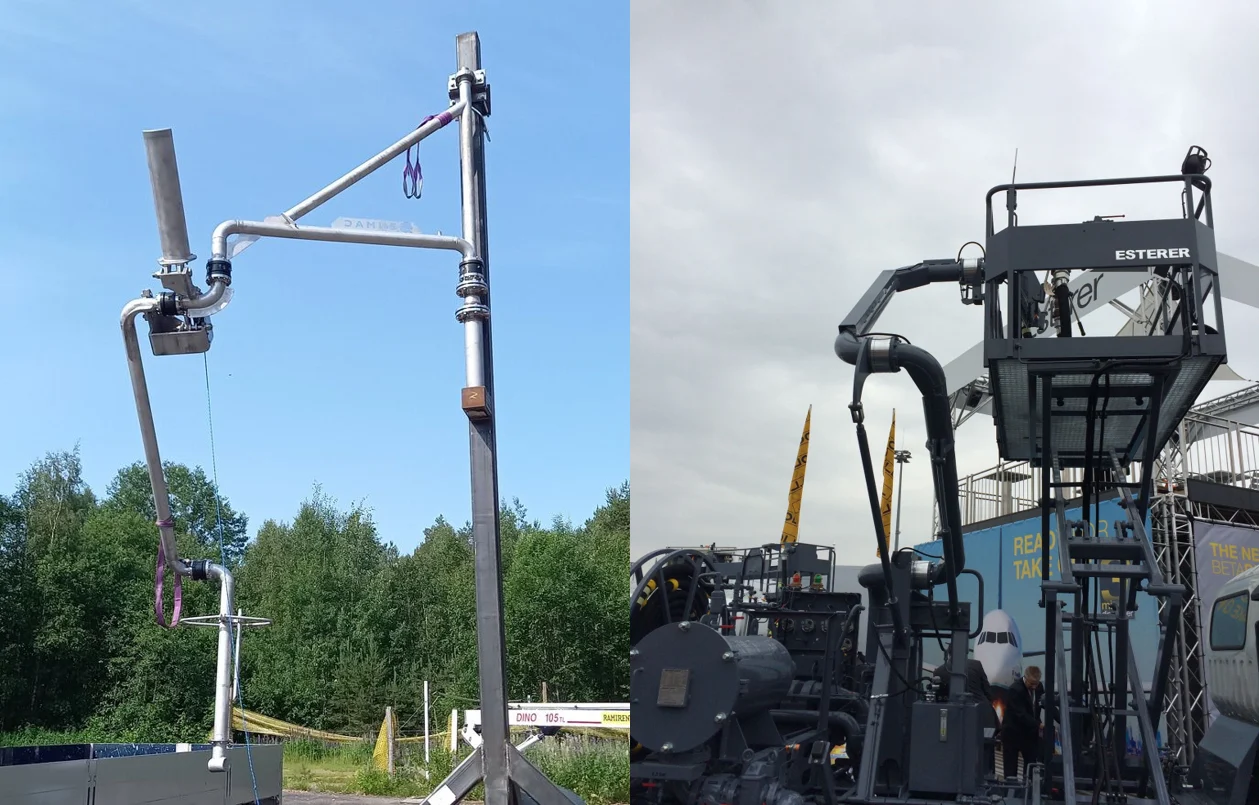
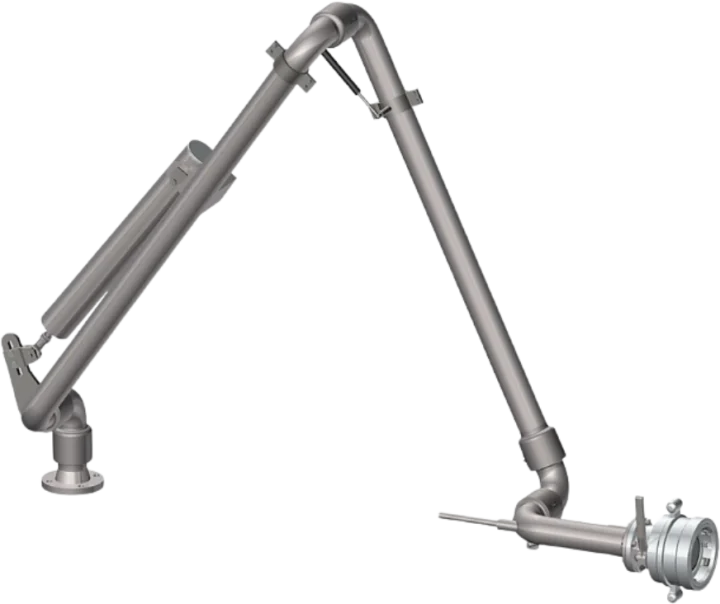
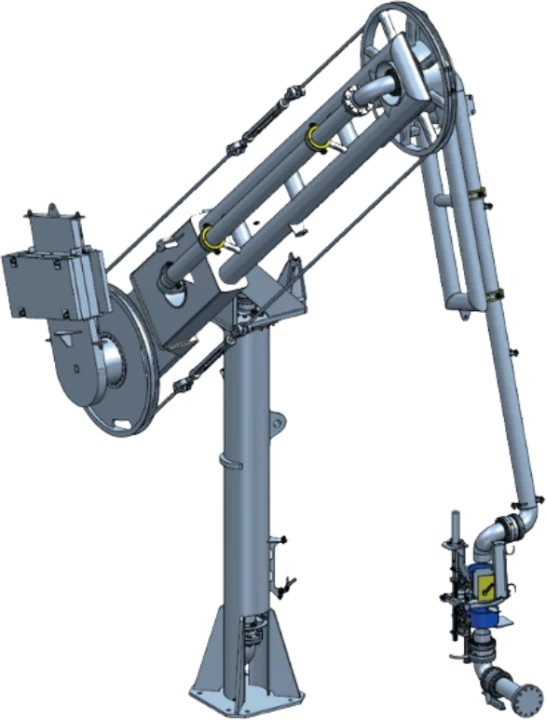
Land Loading and unloading arms are used for filling and discharging solids, liquids, and gases into tank trucks or rail cars. They are generally made up of pipes and swivel joints connected in an articulated assembly, rather than flexible hose, which is what gives them their durability and long service life compared with hose-based systems. The arm unfolds and moves through its working envelope, allowing the operator to bring the connection point to the vehicle quickly and safely, load or unload the product, and retract the arm clear once complete.
Within our range, we offer both top loading and bottom loading arms:
- Top Loading Arms are typically used to load or unload through a manhole found on the top of the tanker or railcar, and are common where vapour recovery is also required.
- Bottom Loading Arms are used in the same way, but the connection is made via a valve located on the side or rear of the tanker, reducing vapour emissions and operator exposure to the product during connection and disconnection.
Specifications
Our loading arms come in sizes ranging from 1″ to 6″, with the following material options available depending on the substance being handled:
- Stainless Steel — for corrosive, hygienic, or food-grade applications
- Aluminium — a lightweight option suited to easier manoeuvrability and lower-duty applications
- Carbon Steel — a cost-effective option for general hydrocarbon and non-corrosive service
Material and size selection depends on the substance being transferred, the required flow rate, and the operating environment, so the correct specification will vary from site to site.
What Loading and Unloading Arms do EWFM offer:
We currently offer arms that are designed and constructed for five specific product services:
- Hydrocarbon — for petroleum and refined fuel products
- Chemical — for aggressive and corrosive chemical media, often specified in stainless steel or Hastelloy
- LPG — for liquefied petroleum gas, incorporating appropriate seals and vapour handling
- Hot Products — for high-temperature substances such as bitumen and asphalt, using seals and materials rated for extreme heat
- Food Service — for food-grade and hygienic applications, built to relevant food safety standards
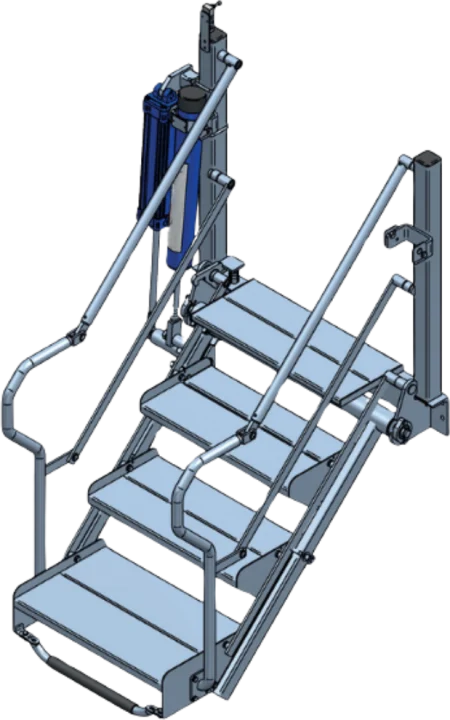
As well as the arms themselves, we also offer a full range of loading arm valves and loading arm accessories, including:
- Signal switches
- Drip buckets
- Spring cylinders
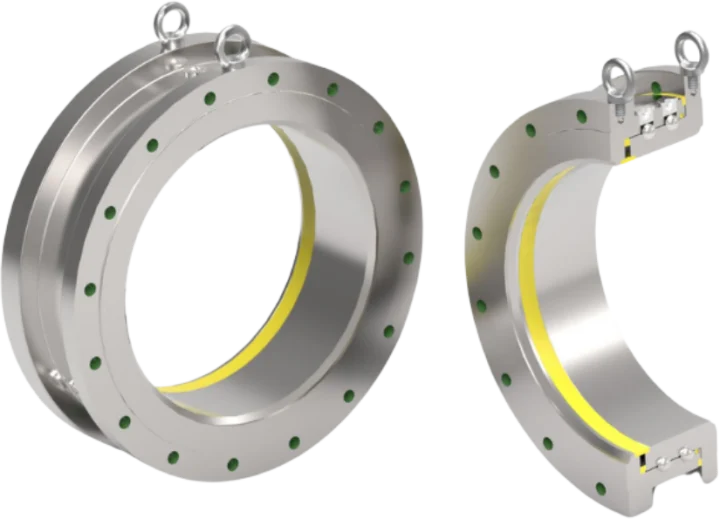
- Emergency release couplings
- Vapour recovery components
You can view our complete range of arms, valves, and accessories on our Loading and Unloading Arms product page.
Get in Touch
Thank you for reading this month’s fact file on our land loading and unloading arms. If you have any questions or enquiries about any of the products mentioned above, then please get in touch and the team will be happy to assist you.
