
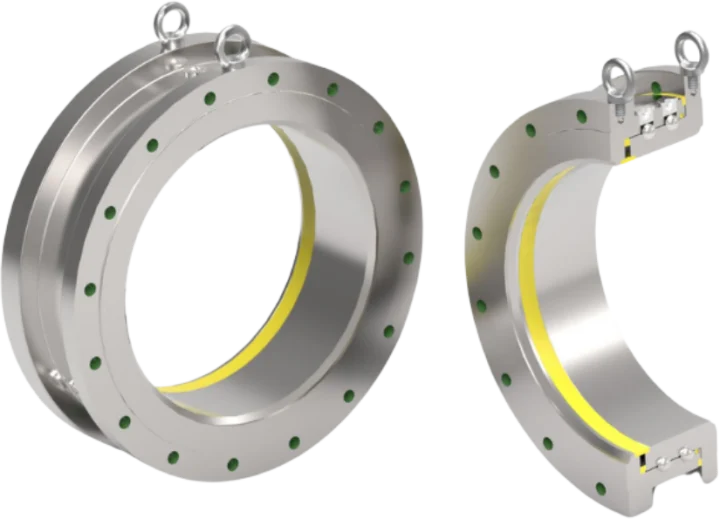








Breakaway Couplings play a vital role in keeping loading, unloading, and transfer operations safe by preventing spills, equipment damage, and costly downtime. They separate under excessive tension, acting as a final line of defence when a hose is pulled, a drive-off occurs, or unexpected movement happens. With so many industries relying on safe fluid handling, choosing the right Breakaway Coupling directly impacts operational safety.
The two most widely used designs are Cable Release and Break Pin (Shear Pin) Breakaway Couplings. Both protect systems effectively, but they work in very different ways and suit different applications. In this blog, we explain how each mechanism functions and highlight their key benefits.
Cable Release Breakaway Couplings:
Cable Release Breakaway Couplings use internal tension cables to hold the coupling together. When a hose is pulled or a drive-off incident occurs, the cables release in a controlled manner, allowing the coupling to separate safely and prevent damage to the hose, equipment, or surrounding area.
Where this design tends to be used:
- Road tanker loading bays, where a driver pulling away before disconnecting a hose is one of the most common causes of coupling failure.
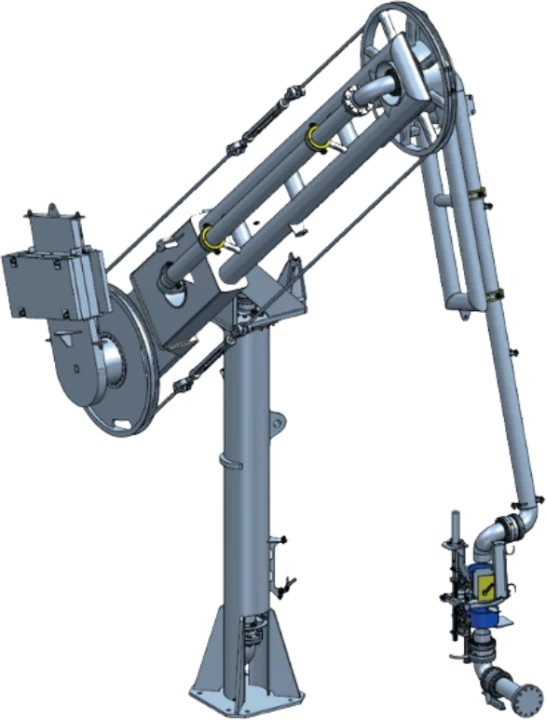
- Fuel depots and terminal loading arms, where hoses are connected and disconnected frequently throughout the day and need a coupling that can be reset quickly rather than replaced.
- Rail car transfer points, where wagon movement during loading is a recognised risk and controlled separation reduces the chance of a secondary spill or whiplash of the hose.
- Bulk chemical transfer at storage facilities, where repeated connect/disconnect cycles make a resettable design more cost-effective over time than a consumable one.
Key Benefits of Cable Release Breakaway Couplings
- Resettable design – in most cases, the coupling can be reassembled and reused after activation.
- Smooth, controlled separation – reduces shock to connected equipment.
- Ideal for flexible or frequently moving hoses – accommodates systems with regular movement.
- Durable and long-lasting – experiences less internal stress compared to Break Pin designs.
Breaking Pin (Shear Pin) Breakaway Couplings:
Break Pin Breakaway Couplings provide a robust, precision-engineered solution for emergency hose separation. Instead of cables, these couplings rely on shear pins designed to break at a specific load, ensuring the coupling separates exactly when needed, protecting both the system and surrounding equipment and operators.
Where this design tends to be used:
- High-pressure fuel and gas transfer lines, where a precise, repeatable activation threshold is critical and false separations cannot be tolerated.
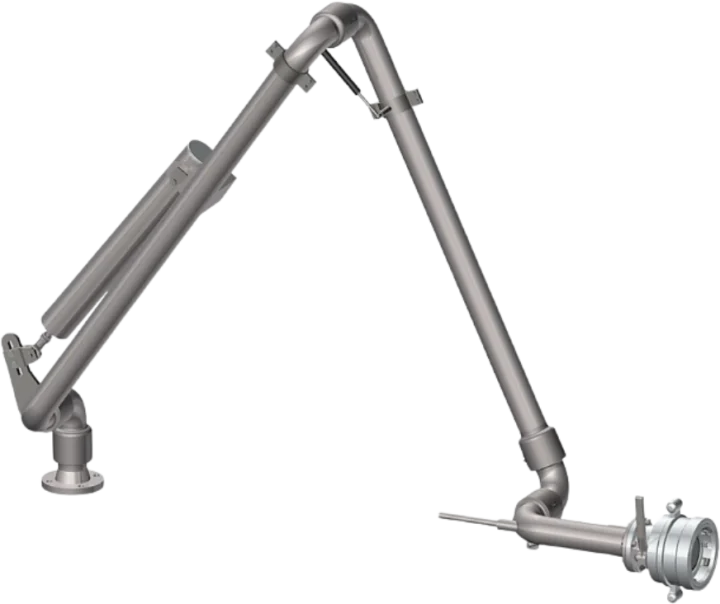
- Offshore and jetty loading arms, where the system is exposed to harsh, corrosive, salt-laden conditions and a simple, low-maintenance mechanism is preferred over one with moving cable components.
- LNG and cryogenic transfer systems, where reliability under extreme temperature swings matters more than resettability, and a pin can be swapped out after activation without needing to service the whole coupling.
- Static or fixed installations, such as permanently plumbed tank connections, where accidental movement is rare and emergency-only operation is the priority.
Key Benefits of Breaking Pin (Shear Pin) Breakaway Couplings:
- Exact activation point – shear pins break at a predetermined load for precise protection.
- Simple, passive design – fewer moving parts mean high reliability in harsh or corrosive environments.
- Emergency-only operation – ideal for high-risk or high-pressure systems where accidental separation must be avoided.
- Robust and durable – engineered to withstand heavy-duty industrial use.
- Minimal maintenance – straightforward replacement of pins after activation.


Choosing the Right Coupling for Your Application
At EWFM, we provide a full range of MannTek Breakaway Couplings designed for a variety of applications:
- Industrial Breakaway Couplings: protect hoses and equipment in chemical, fuel, and general industrial transfer systems, including tanker loading bays and bulk storage facilities.
- Marine Breakaway Couplings: deliver safe, controlled separation for jetty and ship-to-shore transfer operations, even in harsh offshore conditions.
- Cryogenic Breakaway Couplings: built to handle extremely low temperatures for LNG and other cryogenic transfer applications, keeping operations safe and efficient.
Choosing the right MannTek Breakaway Coupling can significantly improve the safety and reliability of your transfer operations. As a general rule of thumb, if your hoses are connected and disconnected often, think tanker bays or mobile loading, a Cable Release design’s resettability will usually save time and money. If your system is a fixed, high-pressure, or harsh-environment installation where precision and low maintenance matter most, think offshore jetties or cryogenic lines, a Break Pin design is usually the better fit.
With options designed for industrial, marine, and cryogenic applications, EWFM helps you find a solution that meets the specific demands of your system. By comparing Cable and Break Pin Breakaway Couplings, you can select a model that provides the perfect balance of safety, durability, and performance.
