







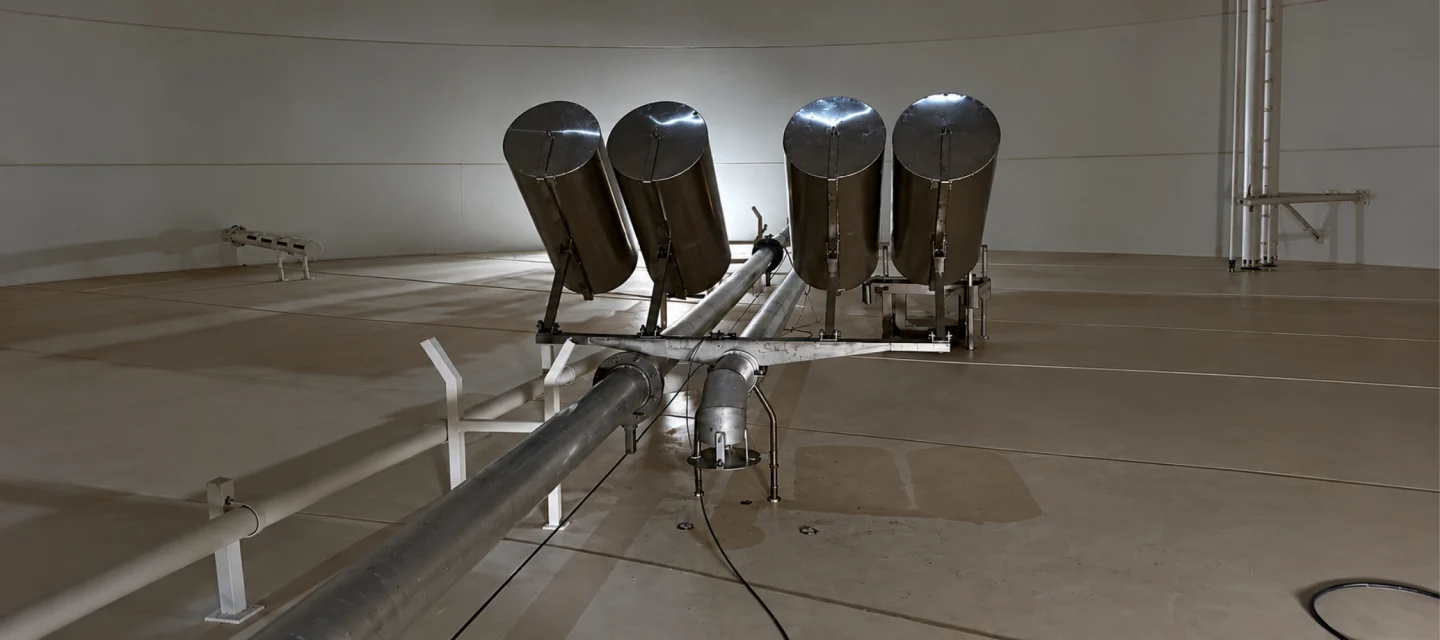
When extracting product from a storage tank, where you draw the liquid from can be just as important as how you transfer it.
Water, sediment and other contaminants can accumulate at different levels within a tank, making it important to extract product from a cleaner area. Floating Suction Units move with the changing liquid level, allowing the system to draw product from just below the surface rather than from a fixed point within the tank.
At EWFM, we offer Floating Suction Units in Single Arm and Double Arm configurations. While both operate on the same principle, the dimensions of the storage tank play an important role in determining which design best suits the application.
So, what is the difference between a Single Arm Floating Suction Unit and a Double Arm Floating Suction Unit, and which one does your storage tank require?
What Is a Floating Suction Unit?
A Floating Suction Unit sits inside a storage tank and extracts cleaner product from approximately 500 mm below the liquid surface.
Rather than drawing from a fixed point near the bottom of the tank, floats move the suction inlet up and down as the liquid level changes.
Drawing product from this position helps the system avoid contaminants elsewhere within the tank. A support leg can also prevent the suction inlet from reaching the bottom of the tank, where water or sediment may accumulate.
Floating Suction Units work within horizontal or vertical tanks, including above and below-ground installations. They can also accommodate tanks with either fixed or floating roofs.
However, one of the most important decisions when specifying a Floating Suction Unit is choosing between a Single Arm or Double Arm design.
What Is a Single Arm Floating Suction Unit?
A Single Arm Floating Suction Unit generally suits applications where the height of the storage tank is less than its diameter.
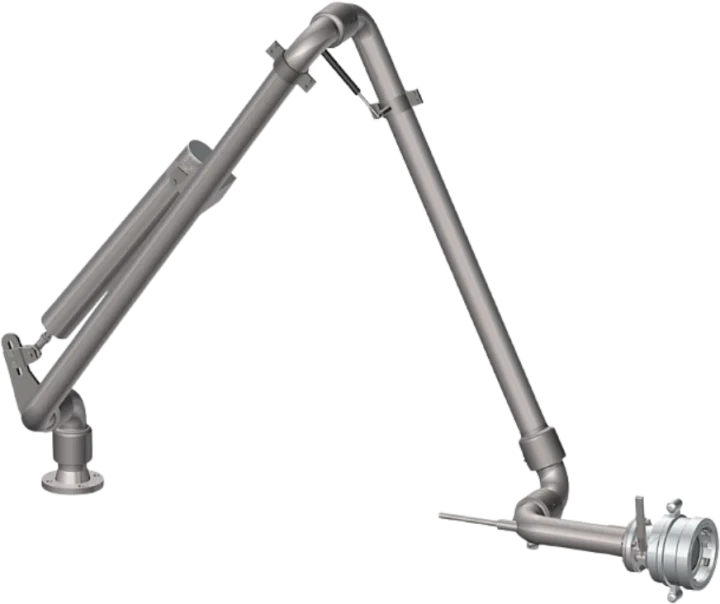
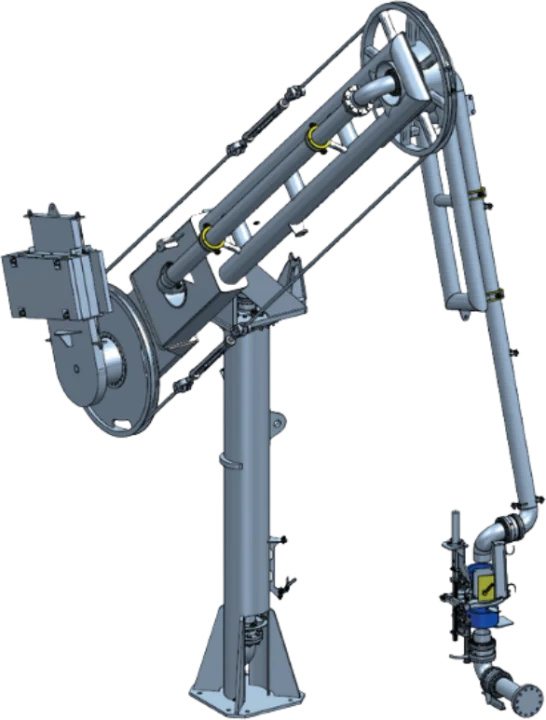
The unit uses a single articulated arm that moves as the level of the stored product rises and falls. Floats keep the suction inlet below the liquid surface, allowing the unit to continue drawing from the required level throughout operation.
This relatively straightforward configuration makes the Single Arm Floating Suction Unit an effective solution where the tank dimensions give a single arm enough space to achieve the necessary movement and reach.
Depending on the application, EWFM can supply Single Arm units in:
- Aluminium
- Carbon Steel
- Stainless Steel
We can also select seal materials, connections and other components to suit the stored media and operating requirements.
What Is a Double Arm Floating Suction Unit?
A Double Arm Floating Suction Unit operates on the same basic principle but suits taller storage tanks where the tank height exceeds its diameter.
In these applications, a single arm may not provide enough reach throughout the full operating range of the tank.
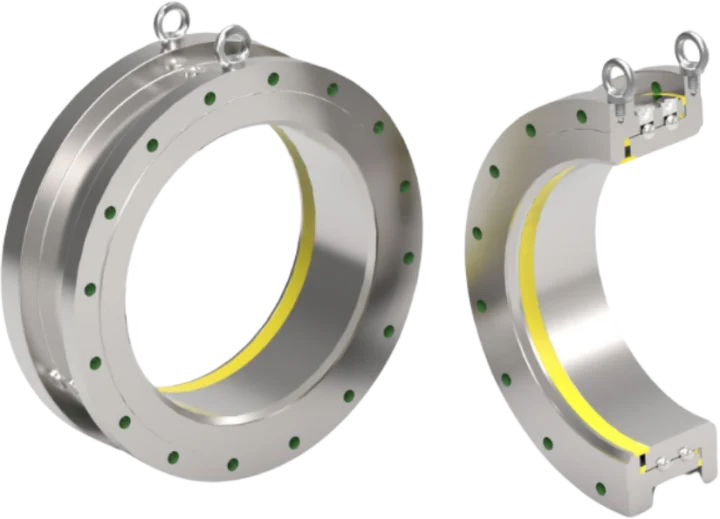
The Double Arm design solves this problem by adding another articulation point. A Style 40 Swivel Joint with two 90-degree elbows sits between the arms, allowing the assembly to extend further within the tank while continuing to follow changes in the liquid level.
As with the Single Arm design, the suction point remains approximately 500 mm below the surface, helping the system draw cleaner product while avoiding unwanted contaminants.
Single Arm vs Double Arm Floating Suction Units
Although both designs perform the same overall function, the key difference s the geometry of the storage tank.
| Single Arm Floating Suction Unit | Double Arm Floating Suction Unit | |
| Typical tank design | Height is less than tank diameter | Height exceeds tanks diameter |
| Number of arms | Single | Double |
| Suction position | Approx. 500 mm below surface | Approx. 500 mm below surface |
| Movement | Single articulated arrangement | Additional articulation for increased reach |
| Materials | Aluminium / Carbon Steel / Stainless Steel | Aluminium / Carbon Steel / Stainless Steel |
| Tank orientation | Horizontal or Vertical | Horizontal or Vertical |
| Fixed/Floating Roof options | Available | Available |
Therefore, choosing between the two isn’t simply a matter of preference. The tank dimensions, operating liquid levels and required reach all need to be considered when determining the correct arrangement.
What About Tanks With a Floating Roof?
Floating Suction Units can also work within storage tanks fitted with a floating roof.
For these applications, a trolley system can replace the standard float arrangement and accommodate the movement of the roof. This setup allows the Floating Suction Unit to continue rising and falling as the tank fills or empties.
Every tank arrangement can differ, so the design process needs to account for factors such as internal obstructions, roof movement and available operating space.
What Else Should You Consider When Selecting a Floating Suction Unit?
Deciding between a Single Arm and Double Arm configuration is only one part of specifying the correct Floating Suction Unit.
The stored product plays an important role because it influences the materials and seals required for the assembly. EWFM can supply Floating Suction Units in Aluminium, Carbon Steel or Stainless Steel, with seal options including Viton® and PTFE.
You also need to establish the highest and lowest operating liquid levels. These measurements help determine the required movement of the unit and keep the suction point correctly positioned throughout the working range.
Other factors include the tank diameter and height, required flow rate, connection requirements, tank orientation and whether the unit needs to pass through an existing manhole during installation.
EWFM can also incorporate optional equipment, including sampling lines for taking samples at different liquid levels and level indicators to show the position of the Floating Suction Unit within the tank.
Providing this information at the enquiry stage helps us design the system around both the tank and the application.
Which Floating Suction Unit Do You Need?
A simple starting point is to look at the dimensions of your storage tank.
If the tank height is less than its diameter, a Single Arm Floating Suction Unit will generally provide the appropriate configuration.
If the tank height exceeds its diameter, a Double Arm Floating Suction Unit will generally provide the additional reach required.
However, tank dimensions only form part of the specification. You should also consider the stored media, operating levels, material compatibility, connections, installation requirements and internal tank layout before selecting the final design.
EWFM provides Single Arm and Double Arm Floating Suction Units engineered around individual storage tank requirements, including solutions for horizontal and vertical tanks and fixed or floating roof applications.
If you have a storage tank project and are unsure which configuration you require, get in touch with the EWFM team to discuss your tank dimensions, stored media and operating requirements.
Floating Suction Units FAQs
A Floating Suction Unit follows the changing liquid level inside a storage tank and draws product from approximately 500 mm below the surface. This position helps the system avoid contaminants at the surface, along with sediment and water that may accumulate towards the bottom of the tank.
The main difference comes down to reach and tank dimensions. Single Arm Floating Suction Units generally suit tanks where the height is less than the diameter. Double Arm units use an additional articulation point to provide greater reach in tanks where the height exceeds the diameter.
Yes. Floating Suction Units can be designed for both horizontal and vertical storage tanks, including above and below-ground installations.
EWFM Floating Suction Units are available in Aluminium, Carbon Steel and Stainless Steel. The appropriate material and seal arrangement will depend on the stored product and operating conditions.
Yes. Floating Suction Units can be configured for tanks with floating roofs. A trolley arrangement can be used instead of the standard floats to accommodate movement of the roof as the tank fills and empties.
