








If you’re looking into loading arms, you’ve probably found there are several different types available. Top loading, bottom loading, rail, road tanker, manual, pneumatic: it’s easy to lose track of which is which. There isn’t much out there that brings the key information together in one place.
This guide does exactly that. Whatever you’re loading, road tankers, rail cars, or something else, this will help you understand the loading arm types available. You’ll learn the differences between the main loading arm types, where they’re used and which configuration is likely to suit your application.
What Is a Loading Arm?
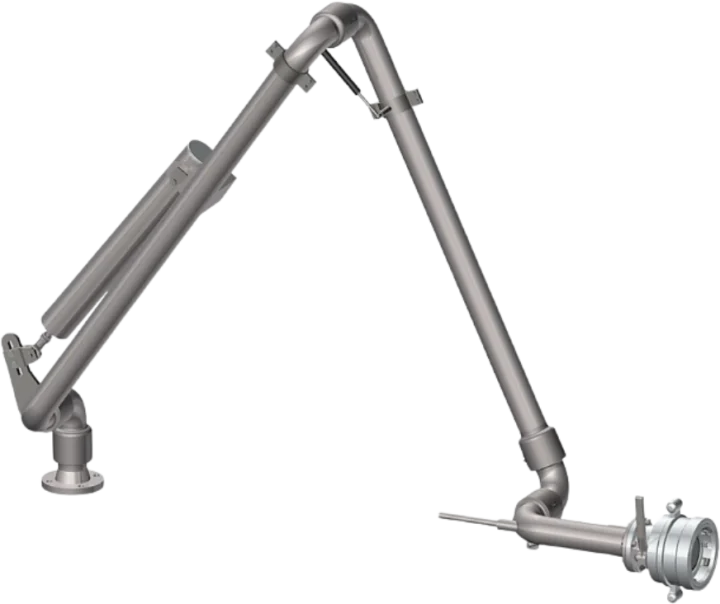
A loading arm is a jointed pipe system. It moves liquid or gas from a fixed point over to a mobile container. The fixed point might be a pipeline or a storage tank. Containers that are commonly used include road tankers, rail cars, or IBCs. Loading arms deal with a wide range of fluids and gases. They need to handle heavy loads, pressure, and movement while staying leak-free and safe to use.
Selecting the right one comes down to a few factors. The product you’re moving. How your loading bay is laid out. The volumes you’re handling. And whether you connect from above or below.
EWFM’s Land Loading Arms & Unloading Arms range covers most of what’s below, available in top and bottom configurations. It’s worth a look alongside this guide.
Although loading arms are available in many different configurations, almost every system is built around one of two loading methods: top loading or bottom loading. Understanding the differences between these two approaches is the best place to start.
Top Loading Arms
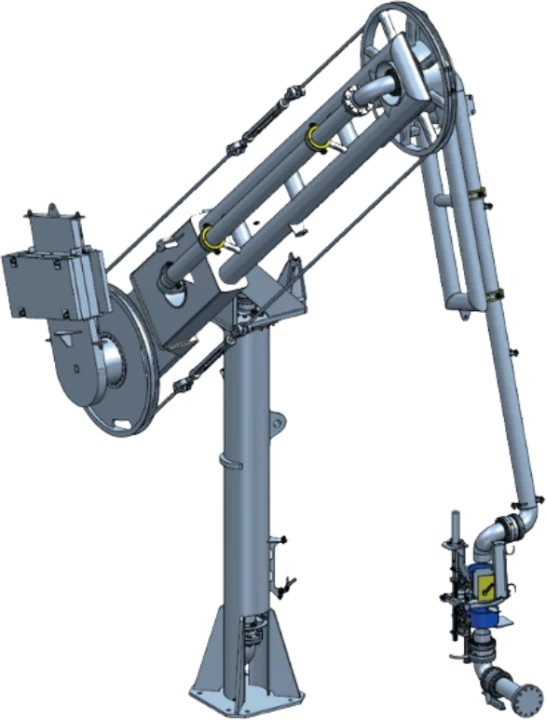
Top loading arms connect to the top of a tanker, railcar, IBC or other container through an opening such as a hatch or dome. The arm is positioned above the vessel before being lowered into place to transfer the product.
Top loading is one of the most established loading methods and remains widely used across many industries. It is often selected where existing infrastructure is already designed for top access or where installing bottom loading equipment is not practical.
Key benefits of top loading arms
- Suitable for a wide range of containers and vessel designs
- Can be installed in existing loading facilities
- Compatible with many different products
- Can be fitted with vapour recovery systems where required
- Available with different reach options to suit various loading bay layouts
Typical applications: Fuel terminals, chemical plants, agricultural sites, industrial manufacturing facilities and bulk liquid transfer operations.
Things to consider
Although top loading remains a common solution, there are some operational considerations.
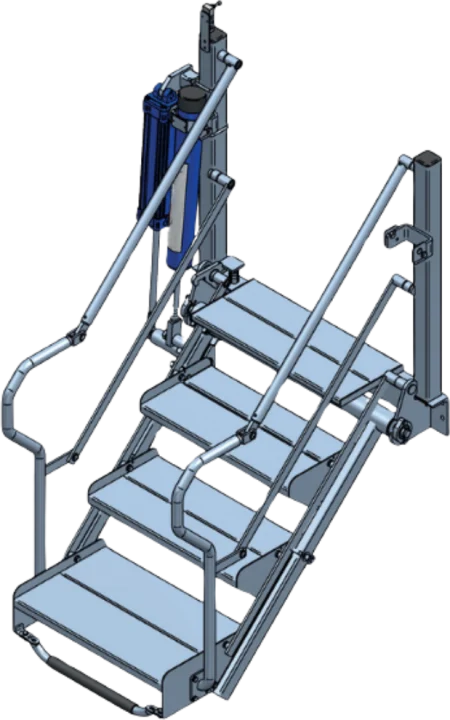
Depending on the installation, operators may need to access the top of a tanker or vessel, meaning safe access arrangements are an important part of the overall loading system. Splash filling can also create additional turbulence during transfer, which may be a consideration when handling volatile or flammable products.
For applications where operator safety, emissions control and loading speed are key priorities, bottom loading is often preferred.
Bottom Loading Arms
Bottom loading arms connect to a connection point located near ground level, usually on a road tanker and, in some cases, rail equipment. Instead of transferring product through the top of the vessel, the product enters through the bottom connection and fills the container from below.
In contrast, bottom loading has become increasingly common, particularly in fuel distribution and high-volume liquid transfer applications, due to the safety and efficiency benefits it provides.
Key benefits of bottom loading arms
- Ground-level connection reduces the need for operators to work at height
- Closed transfer reduces vapour emissions
- Helps minimise splash filling and static generation
- Supports faster loading operations
- Improves operator safety and ergonomics
Typical applications: Fuel distribution terminals, petrochemical plants, chemical processing facilities and bulk liquid transport operations.
Things to consider
Bottom loading provides significant advantages for busy terminals, particularly where vehicle turnaround times and operator safety are important. However, it does require compatible tanker connections and supporting infrastructure.
For existing facilities designed around top loading, converting to bottom loading may require investment in both equipment and site modifications.
Top Loading vs Bottom Loading
Choosing between top loading and bottom loading depends on the requirements of the application. Both systems are widely used, but each offers different advantages.
| Top Loading | Bottom Loading | |
| Connection point | Top of vessel | Bottom of vessel |
| Operator access | May require elevated acess | Ground-level operation |
| Vapour control | Additional systems may be required | Closed transfer reduces emissions |
| Loading speed | Suitable for many applications | Typically faster for high-volume operations |
| Infrastructure requirements | Often easier to install or retrofit | Requires compatible equipment |
| Common uses | Exisiting facilities, flexible applications | Fuel terminals and high-throughput operations |
Loading Arm Applications
While top and bottom loading describe how the product is transferred, loading arms are also selected based on the type of container being loaded or unloaded. The same loading arm principles can be applied across different applications, including road tankers and railcars.
Road Tanker Loading
When specifying a loading arm for road tanker applications, consider the connection position, required reach, loading bay layout and operating conditions. Depending on the tanker design, product being transferred and site requirements, loading can take place through either top or bottom connections.
Loading arms used for road tanker applications are selected based on factors such as connection position, required reach, loading bay layout and operating conditions. They can be used for both loading and unloading operations across a wide range of industries.
Key considerations
- Must accommodate different tanker heights and connection positions
- Can be configured for top or bottom loading
- Often integrated with safety systems such as overfill protection and earthing verification
- Counterbalanced designs help reduce operator effort
Typical applications: Fuel distribution terminals, chemical plants, bulk storage facilities, food and beverage processing sites and industrial manufacturing operations.
The main consideration for road tanker loading is flexibility. Tanker fleets can vary significantly, so the loading arm needs to provide enough movement and reach to safely connect with different vehicles.
Railcar Loading
Similarly, railcars are another common application for loading arms, particularly where large volumes of liquid products are transported over longer distances.
Although railcars operate on fixed tracks, loading facilities can vary considerably. Loading arms need to provide suitable reach and movement to connect safely while accommodating the site layout.
Key considerations
- Suitable for both loading and unloading applications
- Can be configured for different railcar connection arrangements
- Requires sufficient reach to accommodate positioning variations
- Can incorporate vapour recovery and safety systems where required
Typical applications: Fuel terminals, chemical processing plants, bulk storage facilities and industrial rail loading operations.
Rail infrastructure, the product being handled and the site’s operating requirements determine the correct loading arm configuration.
Additional Loading Arm Configurations
Once the loading method and application have been established, additional features can be incorporated to suit the product being transferred and the operating environment.
Vapour Recovery Loading Arms
In some applications, controlling vapours is just as important as transferring the liquid itself. When liquid is transferred into a vessel, operators must safely manage the displaced vapours. Vapour recovery loading arms provide a controlled route for these vapours to return to a recovery system rather than being released into the atmosphere.
They are commonly used when handling volatile products where emissions control and safe vapour management are important.
Key benefits
- Reduces VOC emissions
- Helps improve environmental compliance
- Reduces operator exposure to vapours
- Minimises product loss during transfer
Typical applications: Fuel terminals, chemical storage facilities and solvent handling operations.
The requirement for vapour recovery depends on the product being transferred, site regulations and environmental requirements.
Hot Product Loading Arm
For temperature-sensitive products, heating becomes an important consideration. The most common heating methods include steam jacketing, oil jacketed and electric trace heating. Each offers different advantages depending on the product and site utilities available.
Choose the heating method based on the product, required operating temperature and the utilities available on site.
Steam Jacketed Loading Arms:
Steam jacketed loading arms use steam circulated around the product pipework to maintain temperature.
Oil Jacketed Loading Arms:
Thermal oil jacketed loading arms use heated oil around the product pipework where consistent temperature control is required.
Electrically Traced Loading Arms:
Electrically traced loading arms use heating cables installed along the pipework to maintain product temperature.
Loading Arm Design Options
Not all loading arms offer the same operating range. Depending on the application, they can be supplied as either fixed or articulated systems.
Fixed vs Articulated Systems
Loading arms can be designed with different levels of movement depending on the application and the flexibility required during operation.
Fixed loading arms are suited to applications where the connection point remains consistent, while articulated loading arms use additional swivel joints and moving sections to provide a greater operating range.
Fixed Loading Arms
Loading arms that are fixed are typically used where vehicles or containers connect in a predictable position. Their simpler design can make them a suitable option for dedicated loading points where flexibility is not a priority.
Key benefits:
- Simple design with fewer moving parts
- Suitable for consistent loading positions
- Lower maintenance requirements
- Effective for dedicated applications
Articulated Loading Arms
Articulated loading arms use multiple sections and swivel joints to allow greater movement. This makes them ideal for applications where operators need to reach different connection points or accommodate variations in vehicle positioning.
Key benefits:
- Increased operating range
- Greater flexibility during connection
- Reduced operator effort
- Suitable for busy loading environments with different vehicle configurations
Manually Operated vs Pneumatically Automated Systems
Loading arms can be operated manually or assisted using pneumatic systems, depending on the size of the arm, frequency of use and level of automation required.
Manually Operated Loading Arms
Manual loading arms use counterbalance systems and swivel joints to allow operators to position the arm with minimal effort.
Key benefits:
- Simple and reliable operation
- Lower installation costs
- Reduced maintenance requirements
- Suitable for many standard loading applications
Pneumatically Automated Loading Arms
Pneumatically operated loading arms use compressed air to assist movement, making them easier to position and more suitable for larger or frequently used systems.
Key benefits:
- Reduces operator effort
- Suitable for larger loading arms
- Improves ergonomics
- Can integrate with automated loading systems
Typical Applications
Loading arms are used across a wide range of industries where safe and efficient transfer of liquids or gases is required.
Typical applications include:
- Fuel terminals and distribution facilities
- Chemical processing plants
- Petrochemical sites
- Rail loading facilities
- Bulk storage terminals
- Food and beverage processing
- Agricultural and industrial chemical handling
- Manufacturing and process industries
The best loading arm configuration depends on the combination of product characteristics, container type, transfer requirements and site conditions.
Choosing the Right Loading Arm
There is no one-size-fits-all loading arm. The right solution depends on balancing safety, efficiency, product compatibility and operational requirements. Taking the time to assess these factors early will help ensure reliable performance and lower maintenance throughout the life of the equipment.
Key factors to consider include:
- What product is being transferred?
- Is the product hazardous, corrosive or temperature-sensitive?
- Is the application loading, unloading or both?
- Is the connection made to a road tanker, railcar or another vessel?
- Is top or bottom loading required?
- What flow rate is required?
- What are the operating pressure and temperature requirements?
- Is vapour recovery needed?
- Does the product require heating?
- How much reach and movement is required?
- Is manual or pneumatic operation more suitable?
- Are there hazardous area requirements?
By considering these factors at the design stage, operators can select a loading arm that delivers safe, reliable and efficient product transfer throughout the life of the equipment.
EWFM supplies a range of loading and unloading arms designed for a variety of industrial applications, including top loading, bottom loading and specialist configurations.
If you’d like to learn more, visit our Loading Arms FAQs for answers to common questions about loading arm types, configurations and applications. Alternatively, if you need help specifying the right loading arm for your requirements, contact our expert team for technical advice and guidance.
