







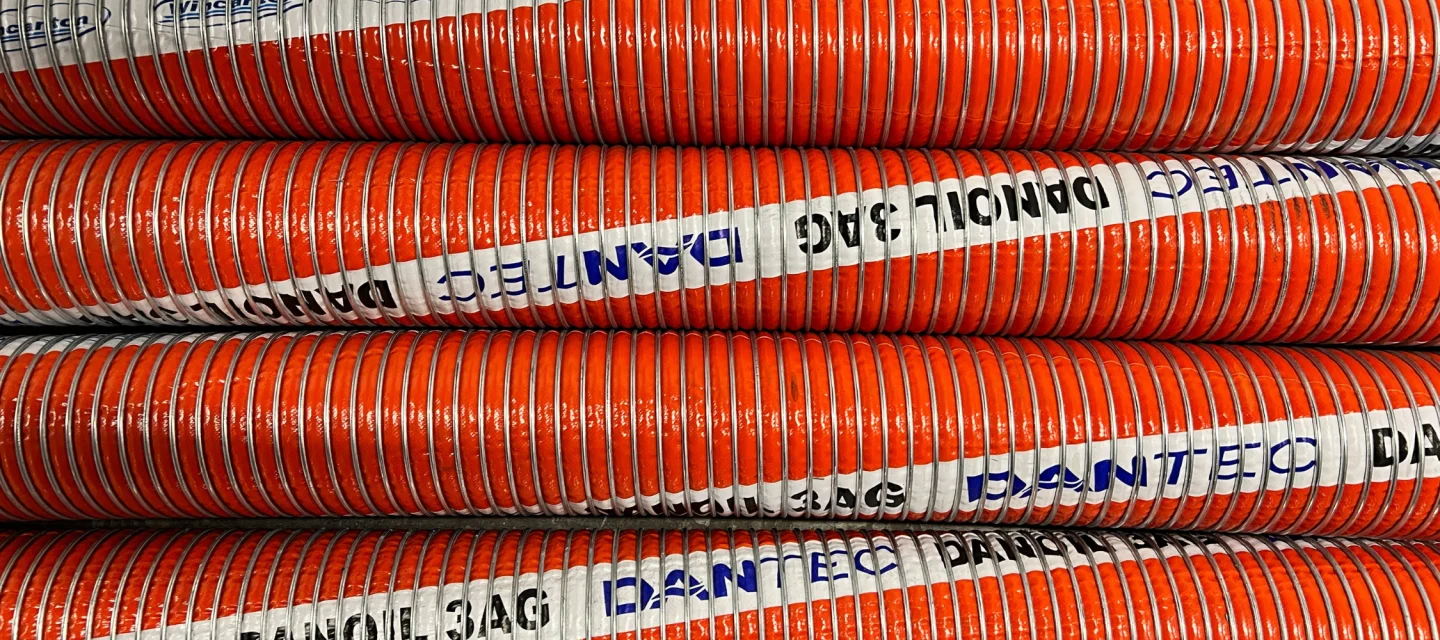
Composite hose plays a critical role in fluid transfer across fuel, chemical, and industrial operations, handling everything from petroleum products to aggressive chemicals under demanding conditions. However, like any piece of transfer equipment, it has a working life, and knowing when that life is coming to an end is essential for safety and efficiency.
Fortunately, failure rarely happens without warning. Instead, subtle signs often appear first, and spotting them early can help you avoid unplanned downtime, spills, and unnecessary safety risks.
With that in mind, below, we look at five key warning signs that your composite hose may be approaching the end of its service life.
1) Visible Cracking, Blistering, or Bulging
The outer cover of a composite hose should stay smooth and intact. Cracking, blistering, or bulging point to a hose whose structure has weakened due to age, chemical exposure, or repeated flexing. If you spot this kind of surface damage, act on it quickly, as it can progress to a more serious failure, particularly under pressure.
2) Leaks around Couplings or Fittings
Leaks, even small ones, are one of the most common and recognisable indicators that something isn’t quite right. Seepage around the coupling or end fitting often signals a degrading seal or a loosening connection. Resolve this promptly, especially when the hose handles hazardous or flammable liquids, as a minor leak can quickly become a serious safety issue.
3) Stiffness, Kinking or Flat Spots
A properly functioning composite hose should stay flexible and easy to manoeuvre. Stiffness, persistent kinking or flat spots that won’t smooth out, signal internal wear or damage within the hose’s construction. This makes the hose harder and less safe for operators to handle, and it can also restrict flow and place extra strain on connected equipment.
You can avoid kinking in your composite hose with a Hosebun. The Hosebun supports the hose, protecting its bending radius and keeping it from kinking. It suspends the hose in a permanent or temporary, semi-rigid position.
4) Exposed or Corroded Wire Helix
An internal and external wire helix, typically stainless or galvanised steel, reinforces composite hose and gives it its strength and shape. If this wire becomes visible through worn cover material, or shows signs of corrosion, take the hose out of service. It’s a strong indication that the hose has reached the end of its safe working life.
5) Age, Usage, or a Change in Application
Even a hose that looks fine on the outside can be approaching the end of its service life. Review hoses more closely once they’ve seen frequent use, faced harsh conditions, or reached the age your manufacturer recommends. It’s also worth checking that the hose still matches the job. If the media, pressure, or temperature of an application has changed, the original hose may no longer be the right fit, regardless of its condition.
Staying Ahead of Composite Hose Failure
Composite hose performs reliably in demanding environments, but no hose lasts forever. Carry out regular visual inspections and take a proactive approach to replacement to avoid unplanned downtime, protect your operators, and keep transfer operations running safely.
Finding the Right Replacement
When it is time to replace your composite hose, choosing the right type for your application matters just as much as spotting the warning signs. At EWFM, we supply a full range of composite hoses engineered for different media and operating conditions, including; Oil Composite Hose for fuels and hydrocarbons, Chemical and Aggressive Chemical Composite Hose for solvents, acids, and caustics, Liquified Gas and Vapour Composite Hose for low-temperature and vapour recovery applications, Fire-Safe Composite Hose for higher-risk environments, and Liquid Cooling Composite Hose for industrial cooling systems.
Whatever fluid, pressure, or temperature range you’re working with, our team can help you find the right hose for the job, or engineer a bespoke solution where standard options don’t fit.
If you’re unsure whether your composite hose needs replacing, or want to discuss the right hose for your application, get in touch with our team.
