











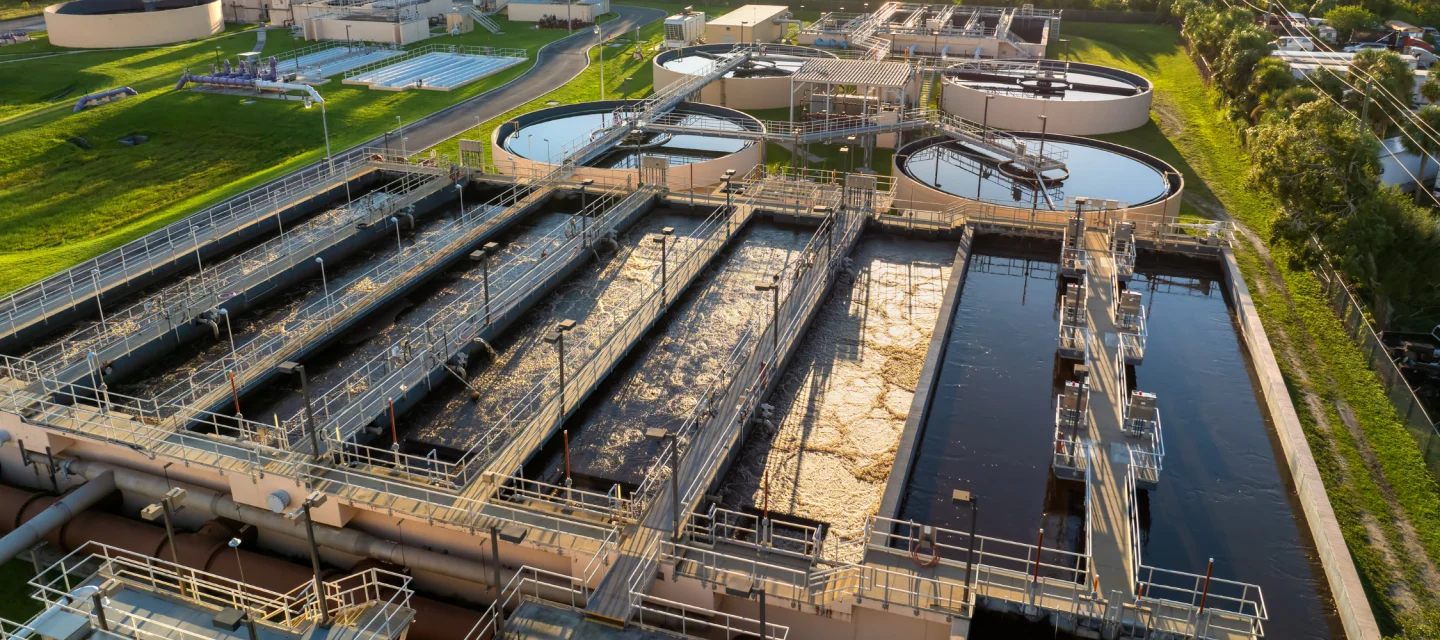
The UK needs more homes but there’s less and less land available to build them on. That’s pushing new housing closer than ever to land that used to be left alone. This includes land next to sewage treatment works.
Smell used to be a fairly minor issue. Now it’s something that can actually stop homes being built. A case in Cambridge shows just how big an impact it can have. This matters for water companies, developers and councils alike. The rules aren’t as simple as “the treatment works was there first”.
The Rule That Decides Who’s Responsible
UK planning has a rule for this. It’s called the “agent of change” principle. In plain terms; if you build something new next to an existing smell problem, it’s your job to prove people won’t be badly affected. This applies to housing built near a sewage works. The treatment works being there first doesn’t stop new housing being built nearby. But it doesn’t let the housebuilder off the hook either.
In practice, this usually means one thing; the developer has to pay for a smell study before their planning application gets looked at properly. Experts model how far the smell travels in different weather. Then they say whether the planned homes are too close.
If the homes are too close, the developer has to change the plan. They might move buildings further away. They might add different ventilation. Sometimes they have to redesign the whole scheme. Get it wrong and the council can refuse permission. Or they approve it with conditions that cause problems later, once people have actually moved in.
A Real Example: Cambridge Business Park
Quite local to EWFM in Cambridge, Anglian Water had planned to move its Cambridge sewage works to a new site, which would have freed up the old site near Milton for new housing. In August 2025, the government cancelled that move because it was too expensive, after around £80m had already been spent, as BBC News reported in December 2025.
That decision had a knock-on effect on a completely separate project nearby: the Cambridge Business Park redevelopment. With the sewage works staying put, the “smell zone” around it stayed too, covering around 70% of the business park site and blocking new homes across most of it. By December 2025, councillors were told the number of homes planned for the site could end up nearly halved as a result.
By July 2026, that smaller plan had become the real one. The Crown Estate, who led the business park redevelopment, submitted its planning application for a £2bn project with up to 500 homes; 40% of them affordable, alongside up to 250 co-living units, offices and lab spaces. That’s the number of homes the smell zone left room for, not the bigger number the site could have supported otherwise.
It’s a clear example of how a smell problem at one site can genuinely shrink a housing project somewhere else entirely. Not just delay it, but permanently cut how many homes get built.
Why This Keeps Getting Harder
A few things are making this a bigger problem than it used to be
Less available land. Housing targets keep pushing development onto sites that used to be considered too close to treatment works. The safe distance around those sites keeps shrinking.
Warmer, drier weather. Smell from treatment works often comes from one cause – sewage sits too long without enough oxygen, especially in pumped pipes. Warmer weather and less rain make sewage stronger. This increases the chance of smell problems. A site can get smellier over time even if nothing else about it changes.
More than one set of rules. Smell in the UK sits under three separate systems at once:
- Environmental permits cover bigger sites, checked by the Environment Agency.
- Planning rules bring in the “agent of change” test.
- Nuisance law asks a simpler question: does the smell seriously affect someone’s ability to enjoy their home?
A site can be doing everything right on paper. It can still end up the subject of a complaint or a planning objection.
It’s Not Just the Developer’s Problem
Water companies might think of this as someone else’s issue. After all, they’re usually not the ones applying for planning permission. But that’s not quite true in practice.
Councils and developers often go straight to the water company during a smell assessment. They ask for data on current emissions, past complaints, and what’s already being done to manage things. If a treatment works has a history of ongoing smell issues, that becomes part of the case against a nearby development. This puts the water company’s own site under public scrutiny, in a process they didn’t start.
There’s a financial side too. Smell complaints affect a water company’s customer satisfaction score, known as C-MeX. That score affects how much money the company can make under Ofwat’s rules. A treatment works with ongoing complaints costs the company twice. It loses out through lower regulatory scores, then it loses out again whenever a nearby planning application puts it in the spotlight.
Fixing the Problem at the Source
Smell modelling and planning strategy both matter. But they only really work if the smell itself is under control in the first place. That means looking at how individual tanks and basins are actually built. A smell management plan on paper isn’t enough on its own.
Open tanks, decanters and clarifiers are usually where the smell starts. Any liquid left open to the air can produce odour. Flow that moves unevenly through a tank tends to make it worse. Three things tend to matter most:
- Sealing open tanks and basin. A cover that sits on or over the water closes off the space above it. A Wastewater Tank & Basin Floating Cover does this for water and oil separators, balance tanks and similar basins. Smell and gas then have nowhere to build up before escaping.
- Roofing grit chambers and decanters. A lightweight, self-supporting roof covers these tanks without heavy construction work. A Settlement Tank Roof does this job. It cuts down the amount of gas and smell that can build up underneath.
- Managing flow at the clarifier outlet. A baffle holds back floating scum and evens out the flow before water leaves the tank. A Wastewater Clarifier Baffle does exactly this. It reduces how much smelly material gets a chance to escape.
None of this replaces a proper smell assessment when new housing is proposed nearby. But it puts the site in a much stronger position once that assessment happens. That helps both the planning outcome and the water company’s own performance scores.
The Bigger Picture
Housing pressure isn’t going away. Neither is the scrutiny that comes with building closer to existing infrastructure. Treatment works that haven’t looked at their smell control in a while could get caught up in a planning dispute they had no part in starting. The effects can last well beyond that one application.
If you’re reviewing how well your tanks, basins or clarifiers are sealed and controlled, take a look at our Wastewater Tank & Basin Floating Cover, Settlement Tank Roofs and Wastewater Clarifier Baffle ranges. Alternatively, you can view all our water treatment equipment, or get in touch with our team to talk through what’s involved for your site.
