







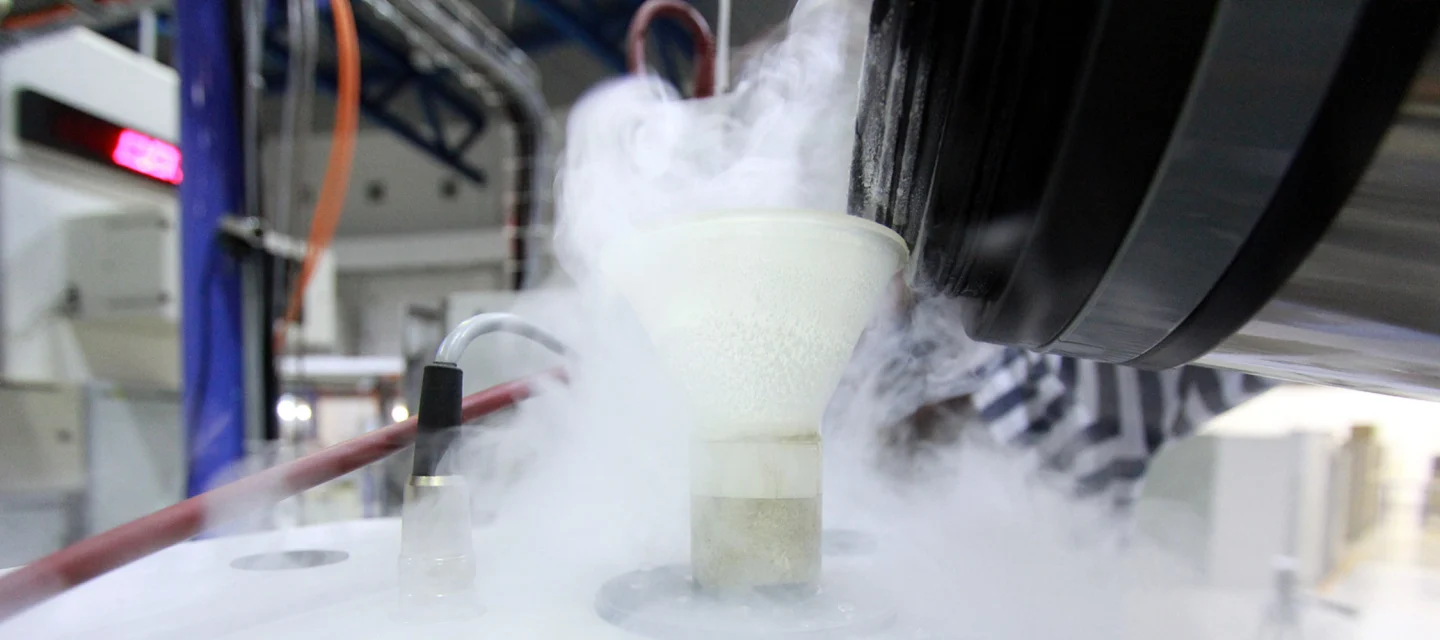
Transferring liquids at extremely low temperatures presents challenges that conventional fluid transfer systems may not be designed to handle.
From material compatibility and thermal contraction to pressure changes and operator safety, cryogenic applications require careful consideration at every stage.
Liquids such as Liquid Natural Gas (LNG), Liquid Nitrogen and Liquid Hydrogen operate at temperatures far below those encountered in most industrial processes. As a result, selecting suitable equipment is essential for maintaining safe, reliable transfer operations.
But what makes cryogenic fluid transfer so demanding, and why does specialist equipment matter?
What Is Cryogenic Fluid Transfer?
Cryogenic fluid transfer involves moving liquefied gases between storage tanks, transport vessels and processing equipment while maintaining extremely low temperatures. These liquids are commonly used in industrial gas production, energy infrastructure, scientific applications and other specialist processes.
Examples include:
| Cryogenic Liquid | Approximate boiling point |
| Liquid Natural Gas (LNG, primarily methane) | -162°C |
| Liquid Oxygen (LOX) | -183°C |
| Liquid Argon (LAr) | -186°C |
| Liquid Nitrogen (LN₂) | -196°C |
| Liquid Hydrogen (LH₂) | -253°C |
These figures represent approximate boiling points at atmospheric pressure. Actual operating conditions vary depending on the liquid’s composition and system pressure.
At these temperatures, materials and components behave differently from those used in conventional fluid transfer applications.
This creates several challenges that engineers must consider when designing and specifying equipment.
The Challenges of Handling Cryogenic Liquids
Cryogenic applications present a combination of mechanical, thermal and operational challenges. Understanding these factors helps operators select equipment suitable for the conditions.
1) Thermal Contraction
When materials experience significant temperature changes, they expand or contract.
During cryogenic transfer, pipework and connected equipment can contract as temperatures fall. This movement can place additional stress on connections, seals and other components, particularly where the system cannot accommodate the change.
Without suitable design considerations, thermal contraction may contribute to leaks, equipment damage or premature component failure.
2) Material Compatibility
Not all materials perform reliably at extremely low temperatures.
Some materials become brittle when exposed to cryogenic conditions, increasing the risk of cracking or failure under mechanical stress. For this reason, engineers must select materials that retain suitable mechanical properties throughout the intended operating temperature range.
Certain grades of Stainless Steel are commonly used in cryogenic applications because of their low-temperature performance. However, material selection must also consider the transferred liquid, pressure requirements and relevant operating conditions.
3) Sealing performance
Maintaining a reliable seal becomes more challenging as temperatures fall.
Sealing materials can change their physical properties when exposed to extreme cold. Differences in thermal contraction between components may also affect sealing performance. A seal suitable for conventional temperatures may therefore be unsuitable for cryogenic service.
Specialist sealing arrangements help maintain connection integrity throughout the intended operating conditions.
4) Pressure changes
Cryogenic liquids can expand significantly when they warm and return to a gaseous state.
For example, one litre of Liquid Nitrogen can produce approximately 700 litres of gas at atmospheric pressure and ambient temperature. If cryogenic liquid becomes trapped within a closed section of pipework, warming can cause pressure to rise rapidly.
This makes appropriate pressure relief arrangements and system design essential.
5) Operator safety
Cryogenic liquids introduce hazards beyond those associated with conventional fluid transfer.
Direct contact can cause severe cold burns, while escaping gases may create oxygen-deficient atmospheres. Certain liquids also introduce additional risks. Liquid Hydrogen is highly flammable when vaporised, while Liquid Oxygen can significantly increase combustion hazards.
Suitable equipment, operating procedures and safety measures are therefore essential when handling these products.
Why Standard Fluid Transfer Equipment May Not Be Suitable
Conventional fluid transfer equipment is not necessarily designed to withstand the conditions found in cryogenic applications.
Components that perform reliably at ambient temperatures may behave differently when exposed to extreme cold. For example, unsuitable materials may lose toughness, while seals and connections may struggle to maintain their intended performance.
Temperature changes can also affect the movement of mechanical components. As a result, selecting equipment based solely on size, connection type or pressure rating is not enough.
Engineers must consider the complete operating environment, including the lowest expected temperature, transferred product and mechanical requirements.
Specialist cryogenic equipment is designed and specified to address these conditions, helping maintain reliable operation where conventional components may be unsuitable.
Cryogenic Swivel Joints: Accommodating Movement at Extremely Low Temperatures
Movement within pipework is another important consideration during cryogenic transfer.
Changes in temperature can create mechanical stresses, particularly where equipment connects to moving or articulated transfer systems.
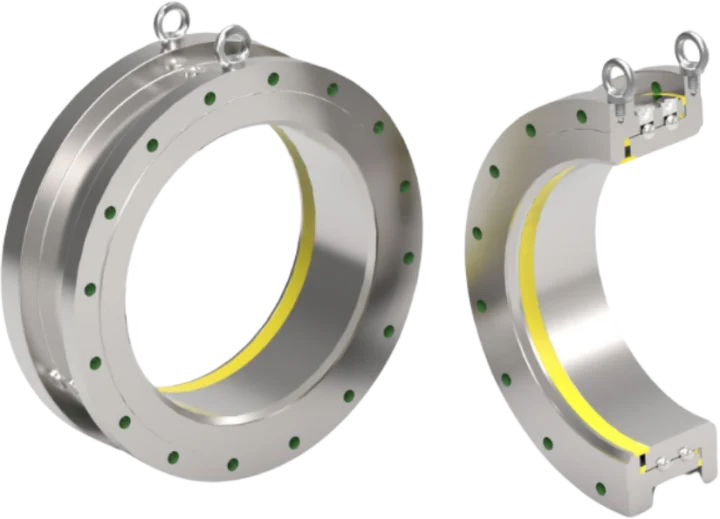
Cryogenic Swivel Joints provide a rotating connection that allows movement while maintaining a sealed fluid path.
This can help accommodate movement and reduce unwanted stress on connected pipework.
EWFM supplies Cryogenic Swivel Joints engineered for temperatures as low as -255°C, depending on the transferred media and selected configuration. The range features cryogenic-grade Stainless Steel construction, dual ball races and specialist sealing arrangements.
As operating conditions vary, engineers must confirm the required temperature, pressure and media compatibility before selecting a suitable Swivel Joint.
Cryogenic Breakaway Couplings: Protection Against Excessive Forces
Alongside temperature-related challenges, cryogenic transfer operations may also involve the risk of accidental separation.
For example, a tanker or other mobile vessel could move while transfer equipment remains connected. Without suitable protection, this movement may place excessive force on hoses, pipework and connected equipment.
Cryogenic Breakaway Couplings provide a controlled separation point within a suitable transfer system. When the specified activation conditions occur, the coupling separates. Internal valves then close to help minimise product release.
EWFM supplies MannTek Cryogenic Breakaway Couplings designed for low-temperature applications, including suitable LNG and industrial gas transfer operations. These couplings use materials and sealing arrangements selected for cryogenic service.
Their operating limits depend on the specific product and configuration. They should not be assumed to have the same temperature rating as EWFM’s Cryogenic Swivel Joints.
When correctly specified and installed, Breakaway Couplings can form an important part of a wider transfer system’s safety arrangements.
What Should You Consider When Specifying Cryogenic Transfer Equipment?
Selecting equipment for cryogenic applications involves several important considerations.
Operating Temperature
The equipment must suit the lowest temperature it will experience, including conditions during cooling, transfer and shutdown.
Transferred Product
Different cryogenic liquids have different properties and hazards. Engineers must confirm that materials and seals are compatible with the intended media.
Pressure Requirements
Equipment must accommodate the system’s operating pressure and applicable design conditions. Pressure relief arrangements also require consideration at system level.
Materials and Seals
Cryogenic-grade materials and suitable sealing arrangements help maintain reliable performance at extremely low temperatures.
Connections and Movement
The equipment must suit the required pipework connections, installation layout and any movement expected during operation.
Safety Requirements
The overall system should address relevant hazards, including accidental separation, pressure build-up, gas release and operator exposure.
Considering these factors during the specification process helps ensure each component suits its intended application.
Supporting Safe and Reliable Cryogenic Fluid Transfer
Cryogenic fluid transfer requires more than equipment capable of withstanding low temperatures.
Material behaviour, sealing performance, pressure management and mechanical movement all influence how safely and reliably a system operates.
Selecting components designed for the intended conditions helps operators manage these challenges and reduce the risk of equipment failure.
At EWFM, we supply specialist equipment for demanding cryogenic applications, including Cryogenic Swivel Joints and MannTek Cryogenic Breakaway Couplings.
Our team can help identify suitable equipment based on the transferred product, operating temperature, pressure and connection requirements.
Working on a cryogenic fluid transfer project? Get in touch with EWFM to discuss your requirements.
