






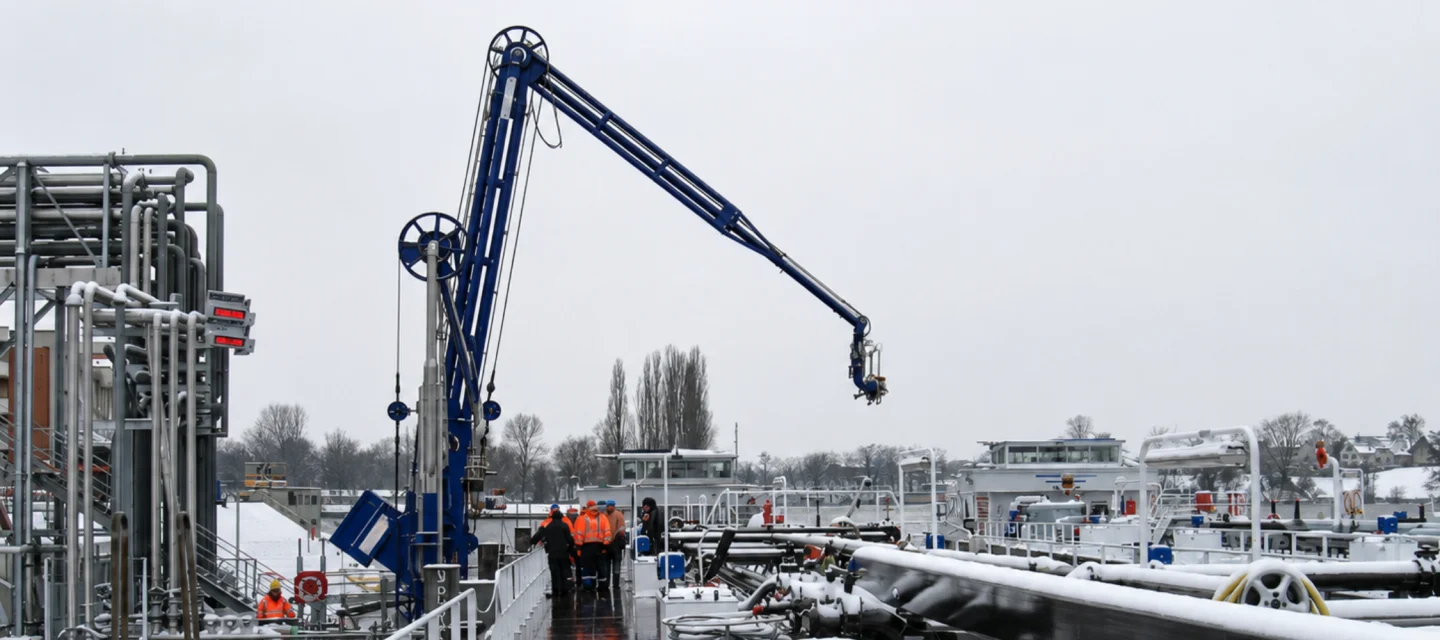
Marine Loading Arms provide an important connection between shore-based infrastructure and marine vessels, allowing liquids and gases to be safely and efficiently transferred during loading and unloading operations.
However, specifying the right Marine Loading Arm involves much more than simply selecting a size and material.
Every terminal, jetty and transfer application presents different operating conditions. The product being handled, vessel sizes, flow rates, operating pressures, environmental conditions and even changes in water level can all influence the final design.
Providing the right information at the beginning of a project therefore helps ensure the Marine Loading Arm is engineered around the requirements of the application.
So, what information is needed to specify a Marine Loading Arm?
Where Will the Marine Loading Arm Be Installed?
One of the first considerations is the environment in which the Marine Loading Arm will operate.
Marine environments can expose equipment to challenging conditions throughout its working life, so understanding the installation location and expected conditions is an important part of the specification process.
Information such as the lowest and highest ambient temperatures should be considered, alongside the maximum wind speed that the Marine Loading Arm may experience.
The location of the installation should also be provided. This helps build a clearer picture of the operating environment before moving on to the more application-specific requirements.
What Product Is Being Transferred?
The cargo or media being transferred has a significant influence on the specification of a Marine Loading Arm.
Different liquids and gases have different characteristics, so identifying the product is only the starting point. Further information may be required to understand how that product will behave as it moves through the system.
This can include:
- Cargo or media being transferred
- Density
- Viscosity
- Operating temperature
- Design temperature
- Operating pressure
- Design pressure
- Maximum required flow rate
These details help determine the requirements of the product pipe and other components within the Marine Loading Arm.
Material compatibility is particularly important. Depending on the application, Carbon Steel or Stainless Steel may be selected for the product pipe, while more specialised transfer duties can require additional consideration.
Applications involving products such as LNG, ammonia and methanol, for example, can introduce very different operating conditions and requirements. Understanding the media from the beginning allows these factors to be considered as part of the overall Marine Loading Arm design.
What Size and Material Are Required?
Once the process conditions have been established, the physical requirements of the Marine Loading Arm can be considered.
The required nominal diameter is an important part of this process and should be assessed alongside factors such as the required flow rate and operating conditions.
Material selection is equally important. The chosen material needs to be suitable for the media being transferred and the conditions it will experience throughout operation.
EWFM’s Marine Loading Arm range includes Carbon Steel and Stainless Steel options, with sizes varying depending on the type of arm selected.
Rather than treating size and material as standalone decisions, they should form part of the wider specification process.
What Connections Are Required?
A Marine Loading Arm ultimately needs to create a secure connection between the terminal and the vessel, making connection details another important area to establish.
On the shore side, information is required for the riser connection flange, including the relevant pressure class. At the vessel end, the ship’s connection and pressure class also need to be identified.
Additional connection equipment may also be required.
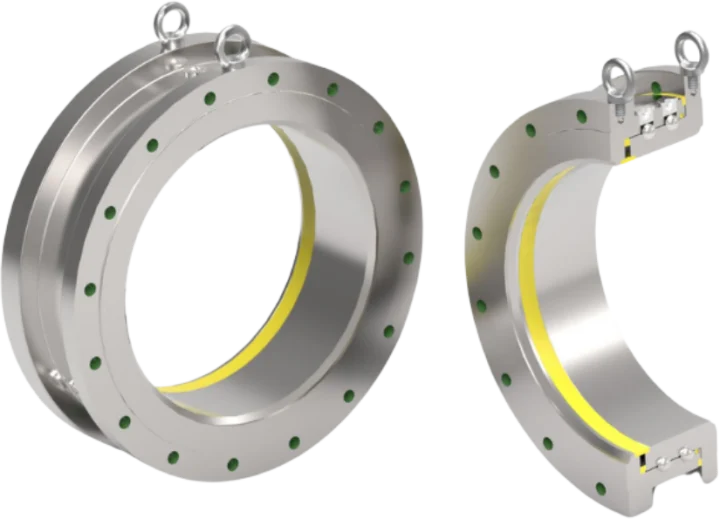
For example, a Quick Connect-Disconnect Coupler (QCDC) can be incorporated to assist with connecting and disconnecting the Marine Loading Arm from the vessel manifold. Depending on the requirements of the application, these can be manually or hydraulically operated.
Identifying these requirements early helps ensure that the complete Marine Loading Arm system is designed around the existing infrastructure at both ends of the transfer operation.
How Will the Marine Loading Arm Be Operated?
The required method of operation should also be established during the specification process.
Depending on the design and application, Marine Loading Arms can be manually or hydraulically operated.
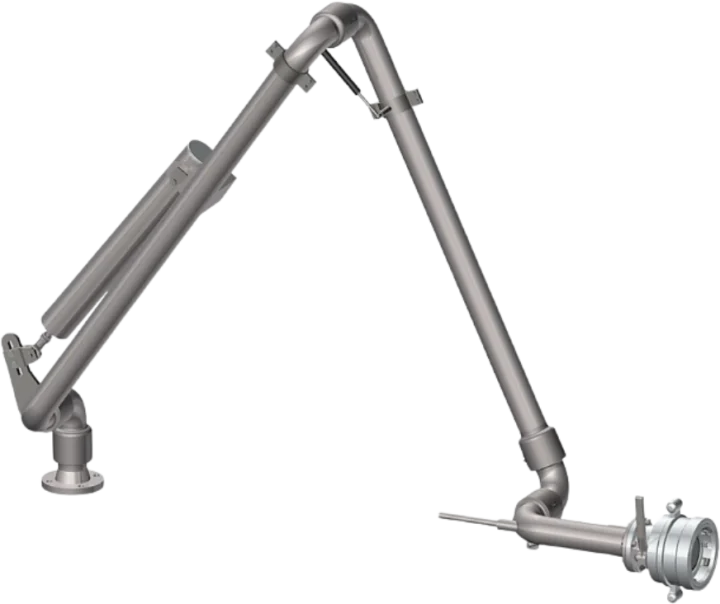
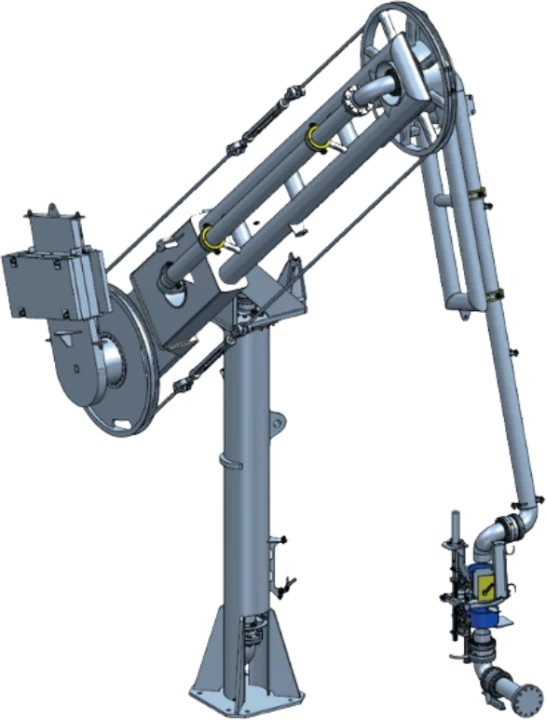
EWFM’s range includes different configurations to accommodate varying requirements. The Barca Marine Loading Arm, for example, is a manual system balanced using adjustable counterweights, while the Minerva and Atlanta provide different support configurations with hydraulic operation available.
The appropriate solution will depend on factors including the size of the arm, operating environment, available space and requirements of the terminal.
What Working Envelope Is Required?
One of the most important areas when specifying a Marine Loading Arm is understanding the required working envelope.
Unlike a fixed pipe connection, a Marine Loading Arm connects shore-based equipment to a vessel that can move.
Water levels can rise and fall, vessels can differ significantly in size and the position of the ship’s manifold can change between operations. The vessel itself may also move while berthed.
A number of measurements can therefore be required, including the:
- Distance between the jetty face and centre line of the riser
- Distance from the jetty face to the berthing line
- Dock and flange positions
- High and low water levels
- Distance between the vessel manifold and ship’s side
- Height of the ship’s manifold
- Vessel sway
- Fore and after surge
- Smallest and largest vessel sizes using the berth
Together, these dimensions help establish the area the Marine Loading Arm needs to safely reach during operation.
This is why specifying an arm based purely on the distance between the jetty and vessel would not provide the full picture. The complete range of vessel positions and movements needs to be considered.
Does the Application Require Additional Equipment?
The Marine Loading Arm itself is only one part of the complete transfer system.
Depending on the application, additional equipment and features may be required to support operation, connection, safety or product handling.
Options can include vapour return lines, vacuum breakers, drain connections and purge systems. Quick Connect-Disconnect Couplers, insulating flanges and support equipment may also form part of the final arrangement.
For applications with additional safety requirements, Emergency Release Couplers (ERC/PERC), audio-visual over-travel alarms and radio remote controls can also be considered.
The properties of the media may introduce further requirements. Electric heating systems and thermal insulation, for example, can be incorporated where maintaining product temperature is necessary.
Establishing these requirements during the initial specification stage helps create a complete solution rather than treating accessories as an afterthought.
Getting Your Marine Loading Arm Specification Right
No two Marine Loading Arm applications are exactly the same.
The vessel, berth, media, environmental conditions and operating requirements all contribute to determining the most appropriate design. Providing detailed information at the beginning of a project gives engineers a clearer understanding of the complete transfer operation and allows the Marine Loading Arm to be designed accordingly.
EWFM supplies a range of Marine Loading Arms for ship-to-shore liquid and gas transfer, including the Barca manual system, Minerva semi-self-supporting system and Atlanta full-support structure.
If you’re planning a new Marine Loading Arm installation or replacing existing equipment, our team can help review your application, establish the information required and recommend a solution suited to your operation.
Looking to specify a Marine Loading Arm for your terminal? Get in touch with the EWFM team to discuss your application.
