







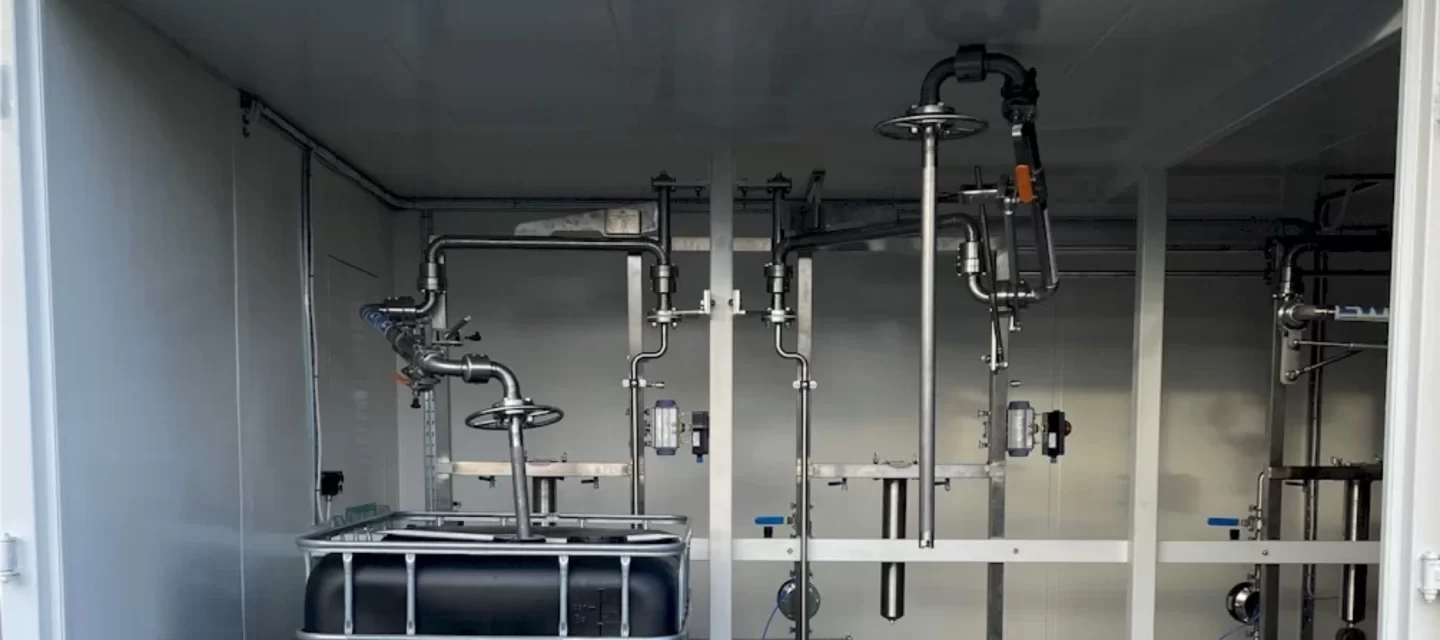
Chemical transfer operations sit at the heart of many processing and manufacturing facilities. Within the chemical industry, safety, control and reliability matter more than almost anywhere else. The loading and unloading stage often carries the highest risk in the whole chemical transfer process, so you need to weigh up product compatibility, operator safety and environmental protection at every step.
As plants raise their safety standards and push for better operational efficiency, land loading and unloading arms offer a proven alternative to traditional hose-based systems. That said, choosing the right setup isn’t always straightforward, and it depends on several key factors. With industry events like CHEMUK bringing the chemical sector together each year to discuss exactly these challenges, this article runs through five important considerations when you specify chemical loading arms.
1) Product Compatibility
Start by checking whether the loading arm you’re specifying is fully compatible with the product you’re transferring. Chemical industry applications vary massively, from highly corrosive acids and solvents through to temperature-sensitive or reactive chemicals, and each one places different demands on the equipment.
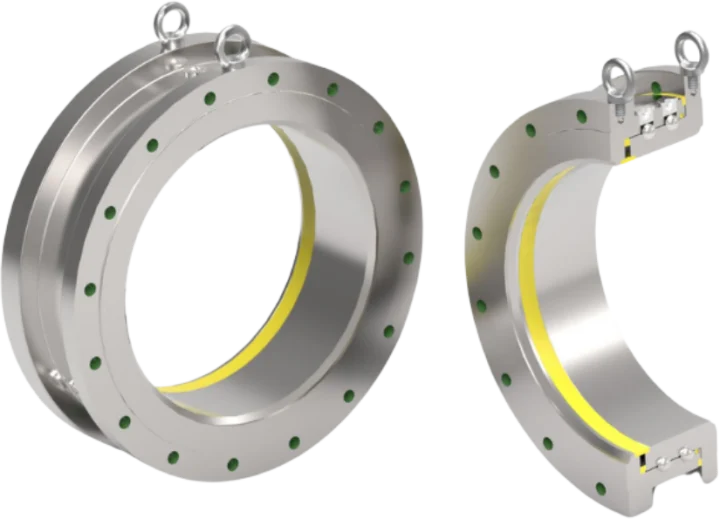
This makes material selection critical. Choose every wetted part, including pipework, seals, and swivel joints, to handle your product’s chemical properties over time. In many cases, stainless steel construction and chemically resistant sealing materials, such as PTFE, PFA, or FKM depending on the media, keep the system reliable and safe over the long run. For highly aggressive chemicals, exotic alloys like Hastelloy offer a step up in resistance where standard stainless steel falls short.
Get a clear understanding of your product early on. This is essential to specifying a loading arm that’s properly suited to your application from day one.
2) Operating Temperature and Pressure
Chemical loading applications often transfer products under a wide range of conditions, high temperatures, varying pressures, or sometimes both together. Design your loading arm to handle these conditions safely if you want reliable performance.
Temperature affects both the product itself and the materials in the system. For higher-temperature applications, you may need specific material grades, or even heating or insulation, to keep the product stable during transfer, our electrically heated and jacketed arms cover this need for products like bitumen and other viscous or temperature-sensitive media. Factor in pressure changes too, and make sure every component carries the correct rating for safe operation throughout the process. Where your line runs above 0.5 barG, check the arm and its components meet Pressure Equipment Directive (PED) requirements.
Get this right at the specification stage. It heads off problems later and cuts the risk of unexpected downtime or failure.
3) Safety and Environmental Protection
Safety and environmental control sit front and centre in every chemical loading and unloading application. Transferring hazardous or volatile products carries inherent risk, so design your loading arm to reduce exposure, prevent leaks, and support safe handling throughout the operation.
Depending on your application, modern loading arms can include sealed connections, dry break couplings, and emergency release systems. You can also integrate vapour recovery where required, which helps reduce emissions and keep you compliant with environmental regulations, especially when you’re handling VOCs. For sites in classified hazardous areas, specify ATEX-rated components along with appropriate earthing and bonding provisions to control static discharge risk.
A well-designed loading arm protects both your operators and the wider environment.
4) Operator Accessibility and Ergonomics
Ease of use drives safe, efficient operation of chemical loading arms. A poorly designed or awkward system increases manual handling risk, slows down operations, and puts unnecessary strain on your operators.
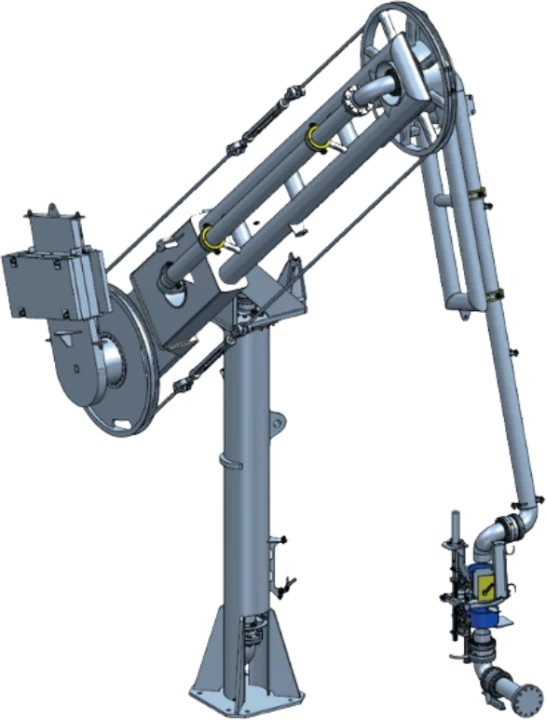
We design our loading arms to solve this with controlled movement and balanced operation, so operators can position them accurately with minimal effort. Features like counterbalancing, assisted movement, and well-designed reach envelopes help operators handle the arm safely across different tanker, vessel, or IBC configurations.
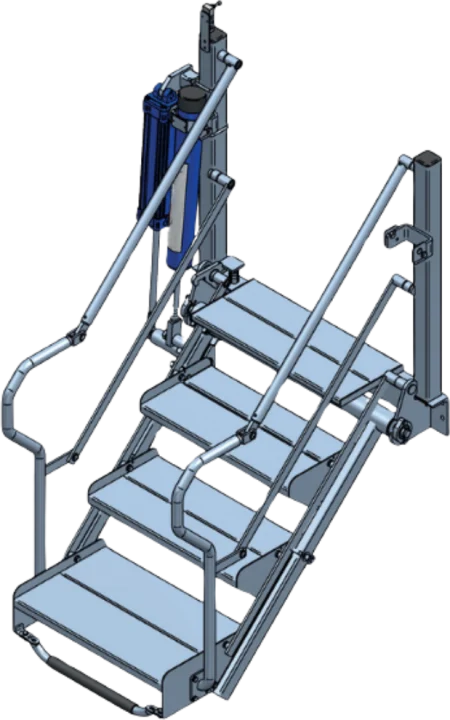
Pair your loading arm with suitable access platforms, and you cut the need for excessive stretching, lifting, or working at height, which further improves site safety.
5) Maintenance and Operational Efficiency
Alongside safety and performance, weigh up long-term maintenance and overall efficiency when you choose a chemical loading arm. In demanding chemical environments, your equipment needs to perform reliably day-to-day, but it also needs to be straightforward to maintain when the time comes.
A well-designed loading arm minimises downtime by reducing wear on key components and giving you easy access for inspection and servicing. Features such as robust swivel joints, durable seals, and modular construction all extend service life and simplify maintenance, and because most components are field-replaceable, you can often service a seal kit or swivel joint without pulling the whole arm out of operation.
Improve reliability and cut maintenance demands, and a properly specified loading arm keeps your operations running smoothly while lowering your overall lifecycle costs.
Proven Chemical Loading Arm Solutions Across Europe and the Middle East
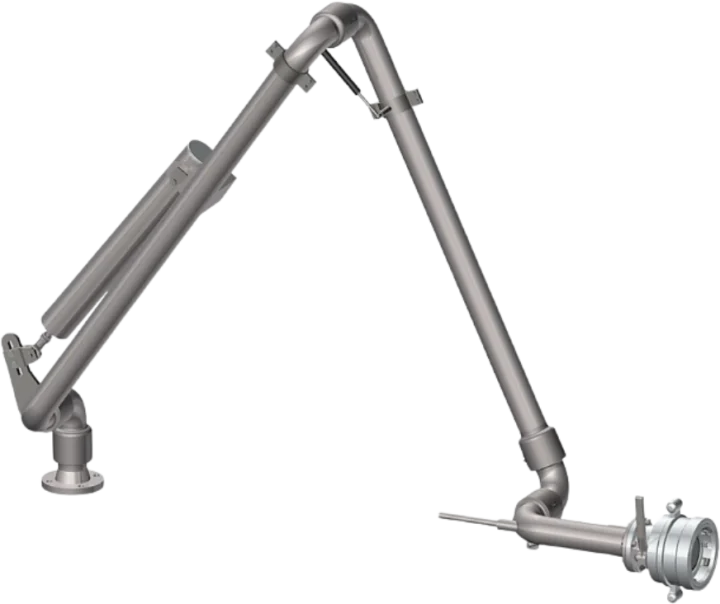
EWFM has delivered chemical loading and unloading arm systems across a wide range of international projects, including installations throughout Europe and the Middle East. Our customers particularly favour the 3″ or 4″ Model 2385 Top Loading Arm. These applications have demanded careful consideration of different operating standards, environmental conditions, and regulatory requirements, and we’ve tailored each system to suit its specific site and process.
From high-temperature environments through to highly corrosive chemical handling applications, we build our loading arm systems to perform reliably in demanding conditions. This international experience has shaped our approach to designing robust, adaptable solutions that we can configure to meet a wide range of chemical transfer challenges.
Specifying a Chemical Loading Arm for Your Site
Every one of these five factors above feeds into a single specification; the right arm for your product, your pressures and temperatures, your safety requirements, your operators, and your maintenance team. Our engineers work through each of these with you, from initial site plan through to final drawings for approval, so your finished system fits first time.
Explore our full Chemical Loading and Unloading Arms range, read our guide on the different types of Loading Arms for more on material and configuration selection, or visit our Chemical industry page to see the full range of equipment we supply to chemical processing sites. If you have questions about specifying a chemical loading arm for your site, get in touch with our team.
