








Global food brands do not achieve consistency, scale and quality by chance. Behind every jar of chocolate spread sits a highly controlled manufacturing process built on precision engineering, temperature management and hygienic transfer systems. While World Nutella Day celebrates a globally recognised product, it also highlights the complexity of modern food production. For food production engineers, manufacturing managers and industrial buyers, products like chocolate spreads pose a demanding processing challenge — particularly in handling, transfer and temperature control.
The Engineering Challenge of Chocolate Handling
Chocolate and chocolate-based spreads are highly temperature-sensitive products. To transfer them efficiently through pipework and into tankers or containers, they must be maintained within a tightly controlled temperature range.
If the temperature drops, viscosity increases and the product solidifies.
If overheated, the product quality can degrade or burn.
In the food and beverage manufacturing sector, maintaining flow characteristics whilst protecting product integrity requires engineered systems specifically designed for heated transfer, hygienic operation and cleanability.
This is where specialist engineering equipment becomes critical.
Heated Loading Arms for Temperature-Controlled Transfer
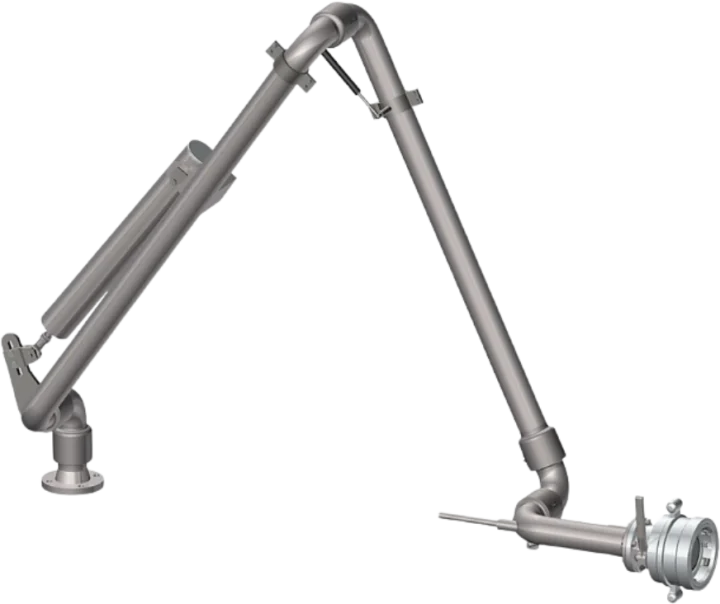
EWFM supports food and drink manufacturers with engineered transfer solutions designed for viscous, temperature-sensitive products such as chocolate.
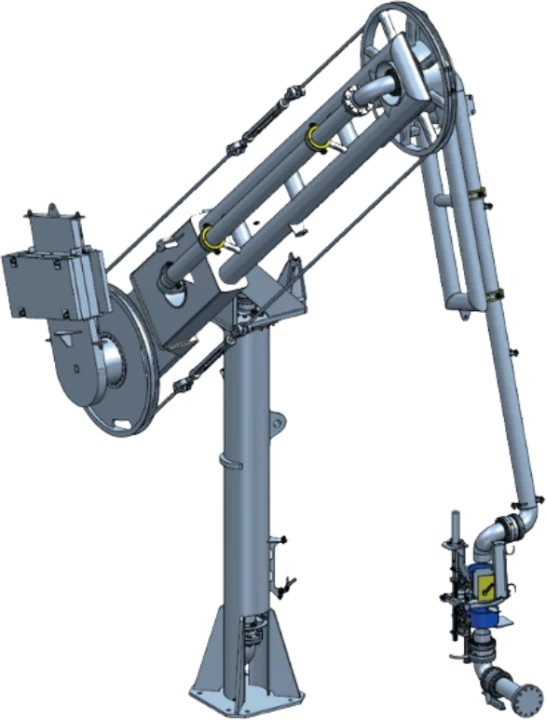
Our Heated Loading Arms are specifically designed to sustain consistent product temperature throughout the transfer process. These systems ensure reliable movement of product from storage or production facilities into road tankers or containers without reducing quality.
We offer three heating methods:
A pipe-within-a-pipe design where the outer jacket is filled with steam. This allows even heat distribution around the inner product line, maintaining optimum temperature during transfer.
Using thermal oil within the jacketed outer pipe provides stable heat control, particularly suited to tasks that demand consistent, long-duration temperature retention.
Electrical tracing cables are applied along the pipework, offering controlled, adjustable heating suitable for defined operational environments.
Each solution is selected based on operational requirements, temperature tolerances and site infrastructure.
Hygienic Design and FDA-Compliant Components
In food production environments, hygienic integrity cannot be compromised.
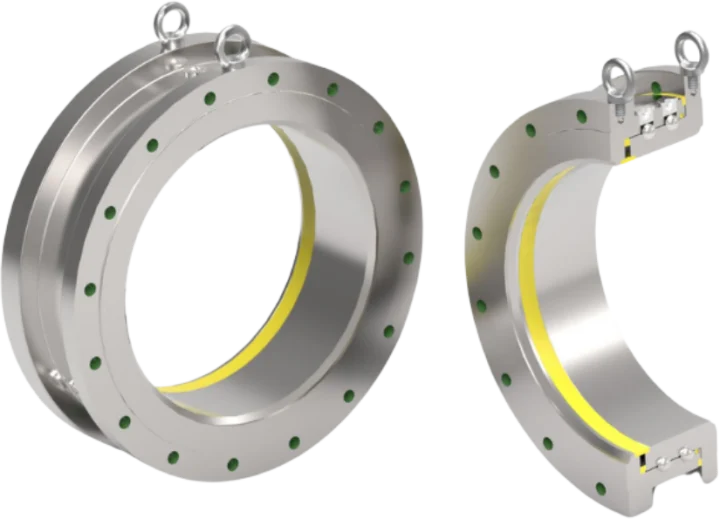
Our Swivel Joints are manufactured to the same heated principles and are fitted with FDA-compliant seals to meet food-grade requirements. These components allow safe articulation during loading operations while maintaining product containment and hygiene standards.
Materials, seals and finishes are selected to comply with food manufacturing regulations and global compliance standards.
Cleaning-In-Place (CIP) and Post-Transfer Efficiency
Cleaning is one of the most vital yet underestimated aspects of chocolate handling. Once product transfer is complete, any residual chocolate left in the pipework will rapidly cool, solidify, and adhere to internal surfaces. In high-volume manufacturing environments, this can lead to blockages, hygiene risks, and costly production delays if not dealt with efficiently.
EWFM heated loading arms are designed with integrated Cleaning-In-Place (CIP) purge systems to eliminate this risk. These systems allow internal lines to be flushed immediately after transfer, preventing build-up and ensuring full compliance with food safety standards.
Through integrating cleanability into the design stage, manufacturers reduce downtime, improve operational dependability and keep consistent production schedules without the need for labour-intensive manual intervention.
How Chocolate Spread Is Manufactured at Scale
Large-scale chocolate spread production is a highly controlled process that depends on precision engineering at every stage. Ingredients are blended and refined under carefully monitored conditions before being transferred into temperature-controlled holding tanks. From there, the product is pumped through hygienic pipework systems into automated filling and packaging lines.
Throughout this process, viscosity management and thermal stability are essential.
High shear mixing systems, heated transfer lines and precision flow control components work together to ensure consistency across large production volumes.
Any weakness in the transfer or temperature management systems can affect product quality, filling accuracy and overall plant efficiency. Reliable engineered components, therefore, play a central role in upholding both output and brand standards.
Engineering Components Used in Food Production
Food manufacturing facilities rely on:
· Heated pipework systems
· Hygienic swivel joints
· Food-grade seals and gaskets
· Precision flow control components
· Temperature management systems
· Clean-in-place (CIP) integration
These components need to endure continuous operation, temperature cycling and stringent hygiene protocols.
Engineering reliability directly affects production efficiency, product quality and regulatory compliance.
Why Temperature Control Impacts Product Consistency
Chocolate-based products are highly sensitive to temperature variations, and even small fluctuations can significantly alter their viscosity and flow behaviour.
If the product cools during transfer, it thickens rapidly, increasing resistance in the pipework and placing strain on the pumping system. Conversely, extreme heat can compromise texture, flavour profile and product integrity.
Preserving a stable temperature throughout storage, transfer and loading is therefore essential to attaining consistent filling weights, predictable flow rates and uniform product quality. Engineered heated transfer systems are designed to precisely control this balance, protecting both production efficiency and end-product standards.
In large-scale food manufacturing, temperature control is not merely an operational consideration — it is a fundamental requirement for preserving consistency and compliance.
Supporting Global Food & Beverage Manufacturing
At EWFM, we supply engineered components and transfer solutions used across the global food and beverage sector — from hygienic fittings to precision mechanical systems used in automated production lines.
Our experience supporting temperature-sensitive product transfer ensures manufacturers can operate efficiently, safely and in full compliance with industry standards.
Explore our food & beverage engineering solutions
Speak to our global supply team
