








In fuel terminals, chemical plants, and bulk liquid storage facilities, safe and efficient loading operations are essential. Transferring fuels, chemicals, and other hazardous liquids into tank trucks and railcars requires equipment that can handle demanding conditions while maintaining reliability and safety.
Composite hose has become a popular solution for these applications due to its flexibility, chemical resistance, and lightweight construction. Designed for fuel transfer, chemical transfer, and more, composite hoses allow operators to move product safely and efficiently during tanker loading and unloading operations, even in environments where durability and chemical compatibility are critical.
Why Composite Hose Is Ideal for Tank Truck & Railcar Loading
Loading and unloading tank trucks and railcars presents several operational challenges, particularly when transferring fuels, chemicals, and other hazardous liquids. Equipment used during these operations must be reliable, safe, and capable of handling demanding environments.
Operators often face issues such as:
- Restricted access points around tankers and railcars
- Heavy or difficult-to-handle transfer equipment
- Exposure to aggressive chemicals or petroleum products
- The need for quick and efficient loading operations
Because of these factors, facilities require transfer equipment that is flexible, durable, and compatible with a wide range of media. Choosing the right hose can make a significant difference in both safety and operational efficiency.
Flexibility and Ease of Handling
One of the standout advantages of composite hose is its exceptional flexibility. Unlike heavy hoses or rigid piping, composite hoses are lightweight and easy to manoeuvre, allowing operators to connect to tank trucks and railcars quickly and safely.
This flexibility reduces strain on personnel, helps prevent handling injuries, and allows smooth adjustments when accessing different tank ports or loading configurations. For facilities with multiple transfer points, this adaptability can significantly improve operational efficiency while minimising setup time and downtime during loading operations.
Durability and Safety Benefits
Composite hoses are designed to withstand the demanding conditions of daily tanker loading and chemical transfer. Their multi-layer construction provides excellent resistance to abrasion, pressure, and chemical attack, ensuring integrity even under challenging conditions.
Safety is another key factor. Many composite hoses are built with anti-static properties, reducing the risk of static discharge during the transfer of flammable liquids. This makes them ideal for petroleum and chemical handling, where even a small spark could have serious consequences.
The combination of long-lasting durability and built-in safety features means facilities can rely on composite hoses for consistent, secure operations, while also reducing replacement costs over time.
Composite hoses remain a reliable choice for tank truck and railcar loading thanks to their flexibility, chemical resistance, and safety features. They allow operators to manoeuvre easily, handle a variety of liquids, and maintain efficient loading operations without compromising safety.
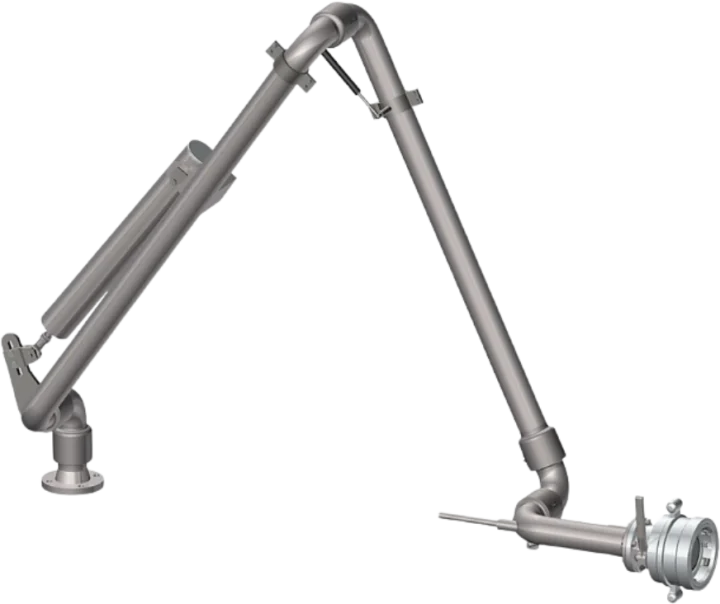
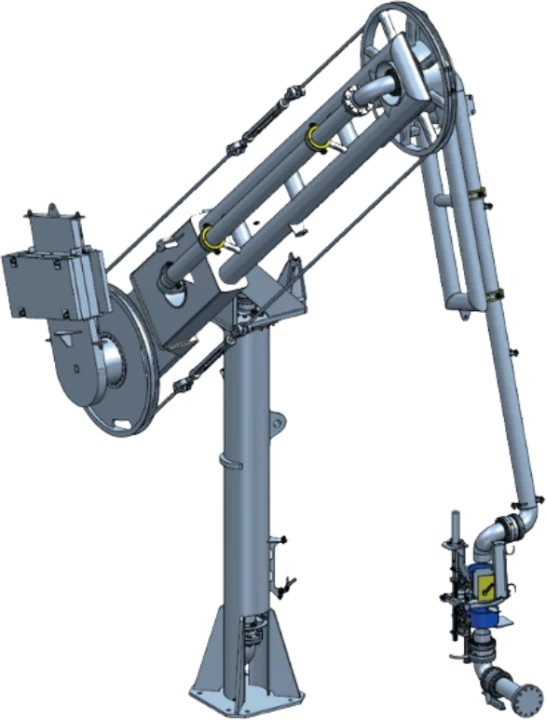
For facilities handling very large volumes or requiring fixed, high-throughput systems, Land Loading and Unloading Arms offer a robust alternative. These arms provide a permanent, heavy-duty solution, capable of handling higher flow rates and reducing manual handling — making them ideal for larger terminals or frequent transfers.
In many cases, operators combine both solutions: using composite hoses for flexible, versatile connections and loading arms for high-capacity, repetitive transfers. This approach allows facilities to optimise both safety and efficiency, selecting the right equipment for each operation.
