








In today’s world of stricter environmental regulations and rising energy pressures, even small errors in ship-to-shore transfers can have major consequences. Recent high-profile spills have highlighted the need for greater accountability from ports and terminal operators.
At the heart of this risk is the Marine Loading Arm. Built for dynamic marine conditions, it is essential for spill prevention, environmental protection, and terminal safety, acting not just as transfer equipment but as a frontline containment system.
The Risk Within Marine Transfer Operations
Ship-to-shore transfer is complex. Vessels are constantly influenced by tide, swell, and wind. Large product volumes are moved under pressure, and operations often run to tight commercial schedules. The connection point between vessel and terminal is therefore one of the most vulnerable stages in the entire supply chain.
Recent incidents show just how real these risks are. For example, in April 2025 at Tanjung Langsat Port Terminal, Malaysia, around 1.6 m³ of very low sulphur fuel oil leaked into the sea during a transfer operation. The spill was caused by a faulty pipeline on the bunker tanker conducting the transfer. Clean-up operations extended to surrounding areas, including local beaches and fishing farms. This real-life example demonstrates that even well-managed terminals are vulnerable.
How Marine Loading Arms Reduce Spill Risk
Unlike traditional flexible hoses, well-designed marine loading arms provide controlled, sealed connections that adapt to dynamic marine conditions. Their strength comes from engineered articulation and balance systems, keeping the transfer interface stable even as vessels move with tide or swell.
At EWFM, marine loading arms come in multiple configurations to suit different operational needs:
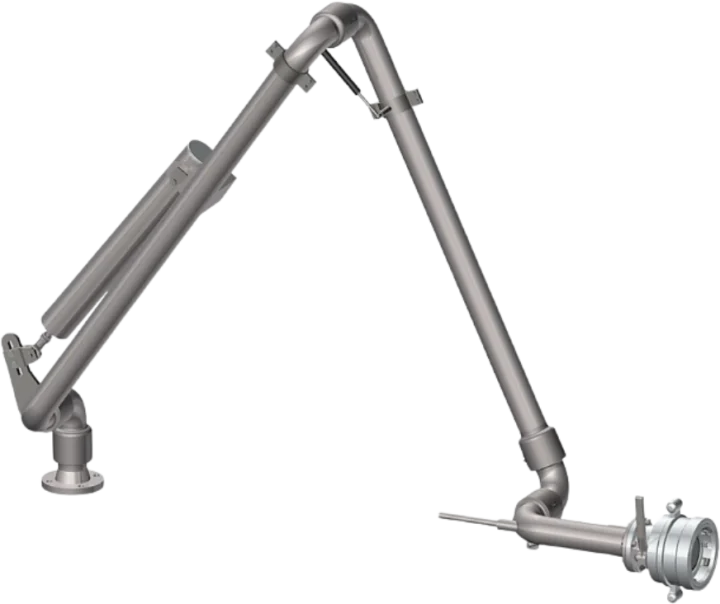
- Barca Marine Loading Arm (Manual): A self-bearing arm balanced by adjustable counterweights, suitable for standard transfer applications.
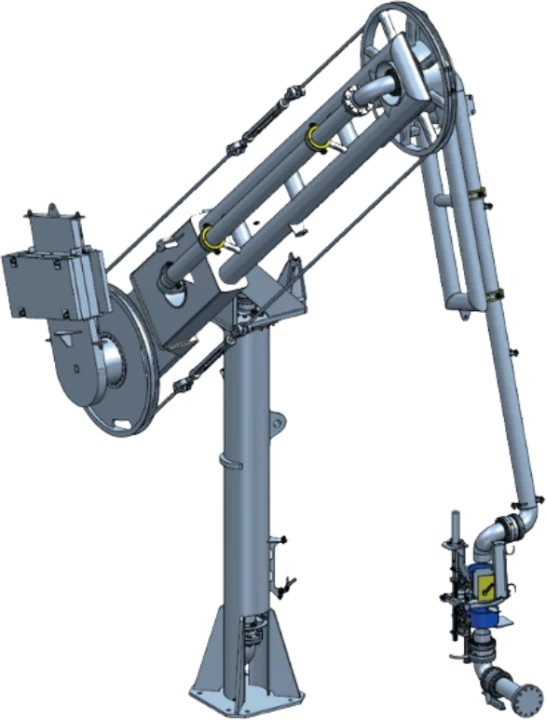
- Minerva Marine Loading Arm (Semi-Self Supporting): Uses a cable pantograph system with separate counterweights to achieve balance and smooth operation.
- Atlanta Marine Loading Arm (Full Support Structure): A fully supported design with a cable pantograph balance system, ideal for larger applications or heavier products.
Each design provides a controlled connection point, reducing leakage risk, enhancing operational safety, and improving environmental outcomes.

Regulatory Pressure, ESG, and Supporting the Energy Transition
Global environmental oversight is tightening, with organisations such as the International Maritime Organisation strengthening measures for pollution prevention and safe vessel operations. Terminal operators now face increasing scrutiny from regulators, insurers, investors focused on ESG performance, and international shipping partners. Demonstrable spill prevention measures are no longer optional, they are essential.
Ports are also adapting to handle LNG, biofuels, and alternative energy products. Emerging energy supply chains demand greater reliability and containment integrity to meet both regulatory and sustainability targets.
In a high-risk world, the safest incident is the one that never occurs. EWFM’s Barca, Minerva, and Atlanta marine loading arms transform one of the most vulnerable stages of terminal operations into a controlled, engineered process.
Investing in these robust, versatile systems is not just about operational efficiency, it is about protecting people, terminals, and the marine environment while meeting global safety and environmental standards.
